Cart
0
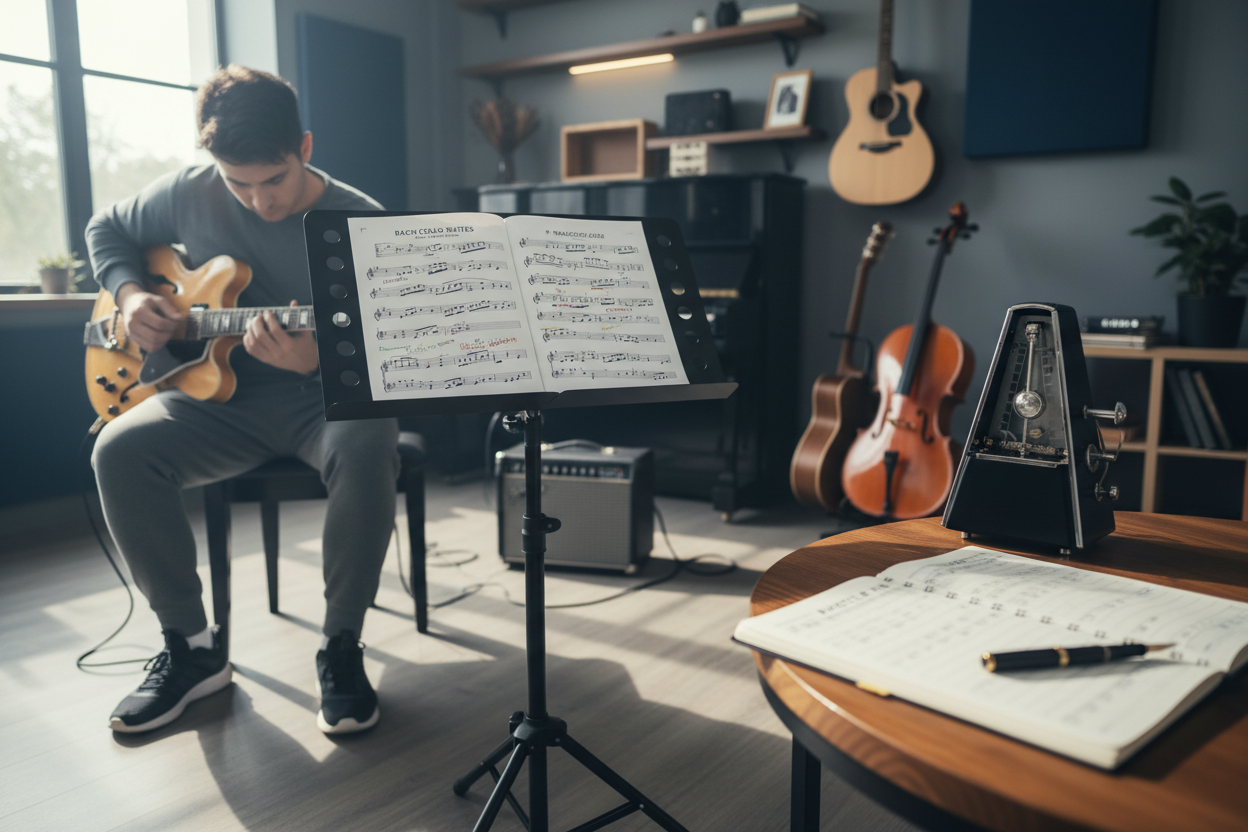
Effective Music Practice Strategies: How to Practice Smarter, Not Harder
Unlock your musical potential by embracing proven strategies such as deliberate practice, spaced repetition, and goal-setting. This guide reveals how to optimize your practice sessions for lasting progress and sustained motivation.
Key Takeaways
- Deliberate practice involves focused, goal-oriented efforts targeting weaknesses to build skill efficiently.
- Spaced practice splits your sessions into shorter, regular blocks to improve retention and reduce fatigue.
- Setting SMART goals directs your practice with clarity and motivation.
- Recording your sessions and self-analyzing enhances objective progress tracking.
- Creating an ideal, distraction-free practice environment fosters consistency and focus.
- Incorporating variety, mental practice, and social opportunities enriches engagement and growth.
- Recognizing and managing plateaus and burnout sustain your musical passion long term.
Table of Contents
- 1. Deliberate Practice: The Foundation of Smart Music Practice
- 2. Spaced Practice: Why Short, Regular Sessions Trump Long Marathons
- 3. Setting SMART Goals to Guide Your Practice
- 4. Breaking Down Practice Into Focused Blocks
- 5. Recording and Self-Analysis: Elevate Your Progress Objectively
- 6. Creating the Ideal Practice Space
- 7. Incorporating Variety and Creativity
- 8. The Role of Mental Practice and Multisensory Learning
- 9. Consistency and Self-Compassion: The Pinnacles of Long-Term Growth
- 10. Leveraging Social and Performance Opportunities
- 11. Dealing With Plateaus and Burnout
- 12. Your Personalized Practice Plan
- Conclusion
1. Deliberate Practice: The Foundation of Smart Music Practice
Deliberate practice is a purposeful and focused approach that targets your weaknesses with clear objectives, unlike casual or repetitive playing. It’s designed to stretch your capabilities and form new neural pathways, accelerating skill development.
- Set specific goals such as mastering difficult passages or improving dynamics.
- Work actively on weaknesses rather than just easy pieces.
- Push beyond your current abilities to foster growth.
- Maintain full focus and eliminate distractions.
Practical tips include breaking complex pieces into smaller parts, concentrating on one objective per session, using tools like metronomes, and recording yourself to track progress objectively.
Click here to know more about deliberate practice
2. Spaced Practice: Why Short, Regular Sessions Trump Long Marathons
Spacing practice into multiple short sessions helps improve retention and muscle memory while preventing mental fatigue and boredom. Research shows spaced repetition can increase recall by up to 49% compared to massed study.
- Divide daily practice into focused smaller sessions.
- Alternate new materials with already mastered pieces.
- Use timers to maintain session focus and avoid burnout.
Combining spaced practice with deliberate practice leads to more durable, effective progress.
Explore more about the science behind spaced practice
3. Setting SMART Goals to Guide Your Practice
SMART goals give direction and motivation by being Specific, Measurable, Achievable, Relevant, and Time-bound. For example, instead of "practice piano," aim for "perfect 16 bars of Beethoven’s Moonlight Sonata focusing on dynamics by Friday."
- Write goals before each session.
- Track progress regularly in a journal.
- Adjust goals flexibly but stay accountable.
- Celebrate small milestones to stay motivated.
This approach keeps your practice intentional and manageable, even with busy schedules.
Check out more examples of SMART goals here
4. Breaking Down Practice Into Focused Blocks
Segmenting practice into short blocks (15-30 minutes each) enhances focus and prevents mental exhaustion. Each block should target a particular skill or passage, separated by brief breaks to rest.
- Use timers to manage block length.
- Assign each block a specific goal like scales or rhythm work.
- Log accomplishments to track progress.
- Take short rests between blocks.
This strategy complements deliberate and spaced practice, making sessions more effective.
Learn more about planning focused practice blocks
5. Recording and Self-Analysis: Elevate Your Progress Objectively
Recording your practice sessions allows for critical self-evaluation, uncovering overlooked errors and confirming improvements. This objective reflection sharpens your focus and accountability.
- Record audio or video of difficult passages.
- Take notes during playback identifying strengths and weaknesses.
- Set new goals based on these insights.
- Share recordings with teachers or peers for feedback.
Regular recording accelerates your learning by fostering mindful self-assessment.
Unlock the power of recordings for rapid learning
6. Creating the Ideal Practice Space
An organized, quiet, and distraction-free environment enhances focus and consistency. Your practice space should make it easy to transition into "practice mode."
- Choose a quiet, interruption-free room.
- Declutter instruments and sheet music.
- Use apps like Forest to minimize phone distractions.
- Ensure good lighting and comfortable seating.
- Personalize the space with motivational elements.
This environment supports a smoother and more effective practice routine.
Discover more about optimizing your practice space
7. Incorporating Variety and Creativity
To prevent burnout, add variety by exploring new genres, improvisation, and mini-games. This keeps motivation high and broadens your musical skills.
- Try composition or improvisation exercises.
- Use challenges such as "Dice Challenges" for diverse techniques.
- Explore different musical styles.
- Alternate technical exercises with expressive playing.
Variety nurtures creativity and prevents mental fatigue.
Explore creative practice ideas and break the monotony
8. The Role of Mental Practice and Multisensory Learning
Mental practice, including visualization, rhythm exercises away from the instrument, ear training, and singing, solidifies your musicianship beyond physical playing.
- Visualize finger movements and performances.
- Practice rhythm by clapping or tapping.
- Listen critically to recordings.
- Engage in solfège or singing exercises.
This multisensory approach improves memory, timing, confidence, and allows practice anywhere.
Learn to practice mentally to strengthen your skills
9. Consistency and Self-Compassion: The Pinnacles of Long-Term Growth
Regular, even brief daily practice builds habits, sharpens skills, and prevents exhaustion. Balance commitment with kindness toward yourself to sustain long-term growth.
- Treat practice like an appointment in your day.
- Link practice to existing routines (e.g., after breakfast).
- Allow for shorter or less-focused days without guilt.
- Practice self-compassion; perfection is not always attainable.
A balanced, enjoyable mindset fuels sustainable musical development.
Strategies to maintain your motivation and commitment
10. Leveraging Social and Performance Opportunities
Participating in performances, group rehearsals, or informal jams provides motivation, confidence, critical feedback, and real-world goals.
- Establish external goals beyond solo practice.
- Improve listening, timing, and communication skills socially.
- Gain accountability through collaboration.
- Enjoy music as a shared experience.
Even playing casually for friends enriches your musical experience.
Discover the benefits of social music-making
11. Dealing With Plateaus and Burnout
Plateaus and burnout are common but manageable. Recognizing the signs and using targeted strategies revives progress and passion.
- Signs: frustration, lack of motivation, mental or physical fatigue.
- Break difficult passages into manageable parts.
- Explore new styles or temporarily revisit old favorites.
- Add variety, mental practice, and take planned breaks.
- View plateaus as normal stages, cultivating patience and creativity.
Discover effective strategies for overcoming practice challenges
12. Your Personalized Practice Plan
Craft a routine tailored to your lifestyle using these strategies. Here’s a sample optimized for busy musicians:
- Morning (10-15 min): Warm up with scales or technical exercises.
- Lunch Break (15 min): Focus on new or challenging sections.
- Evening (20-30 min): Review repertoire and engage in mental practice like visualization or ear training.
- Weekly: Record a performance to track progress.
- Monthly: Set new SMART goals and adjust routine accordingly.
Maintain a tidy practice space and celebrate your progress consistently.
Conclusion: Practice Smarter for Lifelong Musical Mastery
Effective music practice isn’t about hours spent, but how intelligently you use that time. Employ research-based techniques such as deliberate practice, spaced repetition, and goal-setting to transform your sessions. Create an optimal environment, embrace variety, harness mental practice, connect with others, and balance persistence with self-compassion.
By implementing these strategies, you ensure not only the elevation of your musical skills but the sustainability of your passion throughout your musical journey.
Begin today by setting a SMART goal, scheduling focused sessions, and crafting your ideal practice space. Your future musical achievements will thank you!
FAQ
What is deliberate practice and why is it important?
Deliberate practice is focused, goal-oriented practice targeting your weaknesses with the explicit purpose of improving performance. It’s important because it actively develops your skills by pushing beyond comfort zones rather than relying on repetition alone.
How often should I practice each day for effective progress?
Consistency matters more than duration. Even 10-30 minutes daily, divided into focused sessions, is highly effective if practiced deliberately and with clear goals.
How can I stay motivated during practice?
Set SMART goals, incorporate variety and creative exercises, record and review your progress, and engage in social or performance opportunities to maintain motivation and momentum.
What should I do if I hit a plateau or feel burned out?
Recognize it as a natural phase. Take planned breaks, change repertoire or style temporarily, add mental practice, and revisit easier pieces to regain confidence and inspiration.
Is mental practice as effective as physical practice?
Mental practice complements physical practice by strengthening memory, confidence, timing, and auditory skills. While it can’t fully replace physical practice, it significantly supports overall musicianship and skill retention.