Cart
0
Wind Instrument Cleaning and Maintenance Guide
Maintaining your wind instrument’s cleanliness and proper care is essential for optimal sound, longevity, and your health. This guide walks you through effective cleaning routines, material-specific tips, and expert advice to keep your instrument performing beautifully.
Key Takeaways
- Regular cleaning reduces germs and extends instrument life.
- Specific cleaning methods vary based on instrument materials and types.
- Daily and periodic maintenance ensures consistent performance.
- Professional servicing once a year addresses deeper mechanical needs.
- Teachers and parents play an important role in promoting proper care.
- Using recommended products like Steri-Spray and Sterisol helps protect your instrument.
Table of Contents
- Why Cleaning Your Wind Instrument Matters
- Mouthpiece Maintenance: Tips for Different Materials
- Taking Care of the Instrument's Surface
- Reed Instruments: Maintenance Essentials
- Regular Maintenance: Daily and Periodic Duties
- Caring for Different Wind Instruments
- Selecting the Right Cleaning Gear
- Expert Maintenance: Why, When, and How to Consult Professionals
- Teachers and Parents: Guiding the Next Generation
- In Conclusion
1. Why Cleaning Your Wind Instrument Matters
Keeping your wind instrument spotless is not just about appearance; it is vital for hygiene and maintaining sound quality. Instruments like saxophones and flutes harbor bacteria due to frequent mouth contact and moisture buildup, which can cause health issues if neglected. This is especially critical during illness outbreaks, such as COVID-19.
- Regular cleaning eliminates germs and extends the life of your instrument.
- Scheduled maintenance prevents costly repairs due to overuse.
- Cleaning methods must match the instrument’s material to avoid damage.
Learn more about health and safety protocols for music instruments from California State University, Stanislaus.
2. Mouthpiece Maintenance: Tips for Different Mouthpiece Materials
The mouthpiece is the main interface between you and your instrument, so it requires particular attention based on its material.
Metal and Hard Rubber Mouthpieces
Use a 90% isopropyl alcohol spray to clean and sanitize metal and hard rubber mouthpieces. Avoid overuse to prevent surface damage.
Plastic Mouthpieces
Plastic mouthpieces need gentle cleaning with instrument-specific disinfectants like Steri-Spray to prevent surface damage from harsh chemicals.
Hygiene Measures for Mouthpieces
- Avoid sharing mouthpieces, especially when you or others are ill.
- Clean your mouthpiece every time you play.
- Flutists should sanitize the lip plate before sharing the instrument.
For detailed guidance, visit Amro Music’s mouthpiece sanitizing guide.
3. Taking Care of the Instrument's Surface
Metal and Lacquer Instruments
Use a soft cloth with mild detergent to clean metal and lacquer surfaces, then polish with brass or silver polish to restore shine.
Wooden and Plastic Instruments
Use a slightly dampened swab with Steri-Spray or a similar disinfectant. Avoid excess moisture to preserve the wood or plastic finish.
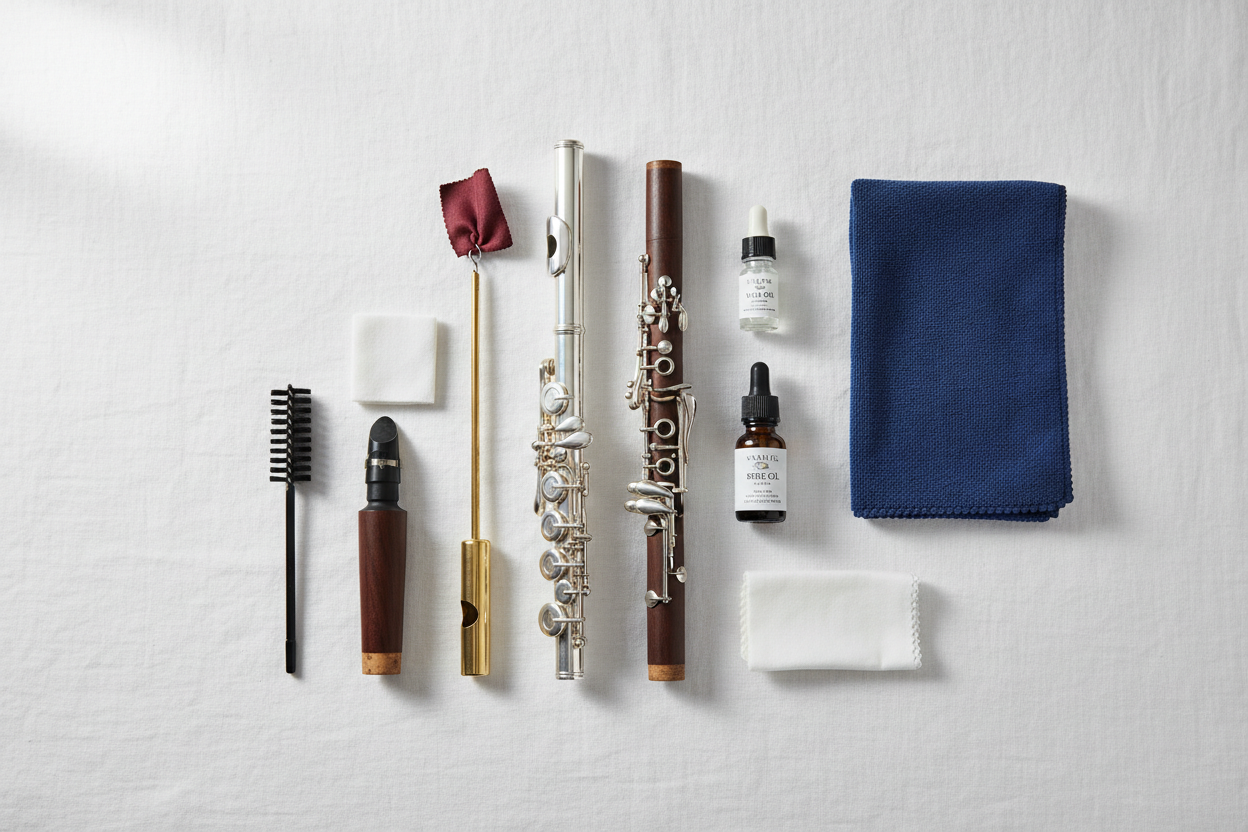
Essential Cleaning Accessories
- Soft microfiber cloths
- Cleaning swabs sized for your instrument
- Steri-Spray or similar disinfectants
- Mild detergent for dirt removal
Discover more cleaning tips at Pew Cushions Cleaning and Sanitizing Guide.
4. Reed Instruments: Maintenance Essentials
Clarinet, oboe, saxophone, and bassoon players know that reeds are delicate and require specialized care.
Keeping Reeds Clean
After playing, spray both sides of the reed with Steri-Spray and allow it to dry fully before storing to avoid mold.
Taking Care of Reeds
- Avoid sharing reeds.
- Replace reeds after illness.
- Ensure reeds dry completely between use.
Tailored Care Tips for Reed Instruments
- Clarinet: Assemble carefully to protect cork.
- Oboe: Warm gently before playing.
- Saxophone: Swab body and neck separately.
- Bassoon: Clean the bocal regularly.
More reed instrument care tips are available at Amro Music.
5. Regular Maintenance: Daily and Periodic Duties
Daily Chores
- Wash your hands before playing.
- Use a cleaning swab to dry the instrument’s interior.
- Empty valve and slide water after practice.
- Apply cork grease sparingly on joints.
- Store in a rigid case after each use.
- Avoid eating or sugary drinks before practice.
Weekly or Fortnightly Responsibilities
- Oil valves and slides as needed.
- Clean the mouthpiece and reeds thoroughly.
- Apply cork grease regularly to maintain seals.
- Swab inside tubes to remove built-up moisture.
Teachers and adult musicians alike benefit from adopting these habits early. Refer to Yamaha/Nottelmann’s tips for detailed maintenance schedules.
6. Caring for Different Wind Instruments
- Flutes: Use a gentle rotating cleaning rod for pads; sanitize lip plates when sharing.
- Clarinets: Assemble carefully; clean interiors with pull-through swabs; spray and dry reeds before storing.
- Oboes: Warm gently; use damp swabs carefully to avoid moisture damage.
- Saxophones: Swab body and neck separately; oil keys and grease cork joints regularly.
- Bassoons: Clean the bocal consistently; apply cork grease biweekly; store in hard cases.
For comprehensive advice, visit WA Music’s instrument-specific guidelines.
7. Selecting the Right Cleaning Gear
Choosing appropriate cleaning products and tools protects your instrument while ensuring thorough hygiene.
Recommended Products
- Sterisol: Widely recommended for disinfection.
- Steri-Spray: Designed specifically for musical instruments.
- Mi-T-Mist: Contains 70% isopropyl alcohol with a light spearmint scent.
Avoid strong chemicals that can damage finishes. Find professional-grade products at West Music.
Essential Cleaning Tools
- Microfiber cloths
- Size-appropriate cleaning swabs
- Small cotton swabs for detail work
- Cork grease formulated for your instrument
8. Expert Maintenance: Why, When, and How to Consult Professionals
In addition to regular care, an annual professional service is essential to keep your instrument in perfect working order.
- Valve and key alignment
- Pad regulation and cork replacement
- Deep internal cleaning inaccessible to users
- Repairing issues like stuck valves or leaks before escalation
Do not delay professional consultation if even minor problems appear.
9. Teachers and Parents: Guiding the Next Generation
Educators and parents hold vital responsibility in cultivating lifelong proper instrument care habits in students.
- Teach the importance of hygiene and maintenance early.
- Supervise hands-on cleaning routines.
- Stress personal use of mouthpieces and reeds.
- Enforce consistent cleaning schedules.
- Encourage safe storage in protective cases.
Early guidance fosters respect for instruments, reduces damage, and maintains hygiene.
10. In Conclusion
The sound quality, durability, and hygiene of your wind instrument depend heavily on regular, material-appropriate cleaning and maintenance. Implementing daily routines, using recommended products, and scheduling professional servicing ensures your instrument performs beautifully for years. Whether preparing for a first recital or a seasoned concert, consistent care is your best ally.
Elevate your maintenance habits by exploring professional cleaning products at West Music and trusted expert guides.
FAQ
How often should I clean my wind instrument?
Clean the mouthpiece after every use, swab the interior daily, and perform a more thorough cleaning of all parts weekly or biweekly. Annual professional servicing is recommended for deep maintenance.
Can I use regular household cleaners on my instrument?
No. Household cleaners can damage finishes and delicate parts. Always use products designed specifically for musical instruments, such as Steri-Spray or Sterisol.
What should I do if my instrument develops an air leak?
Schedule a professional technician to inspect and repair it promptly. Ignoring leaks can worsen damage and affect playability.
Is it safe to share mouthpieces or reeds?
Sharing is not recommended due to hygiene risks. If sharing is necessary, ensure thorough cleaning and disinfection before and after use.
How do I keep wooden instruments from drying out?
Avoid excessive moisture during cleaning, store in protective cases with the right humidity, and have a professional inspect any cracks or damage regularly.