Cart
0
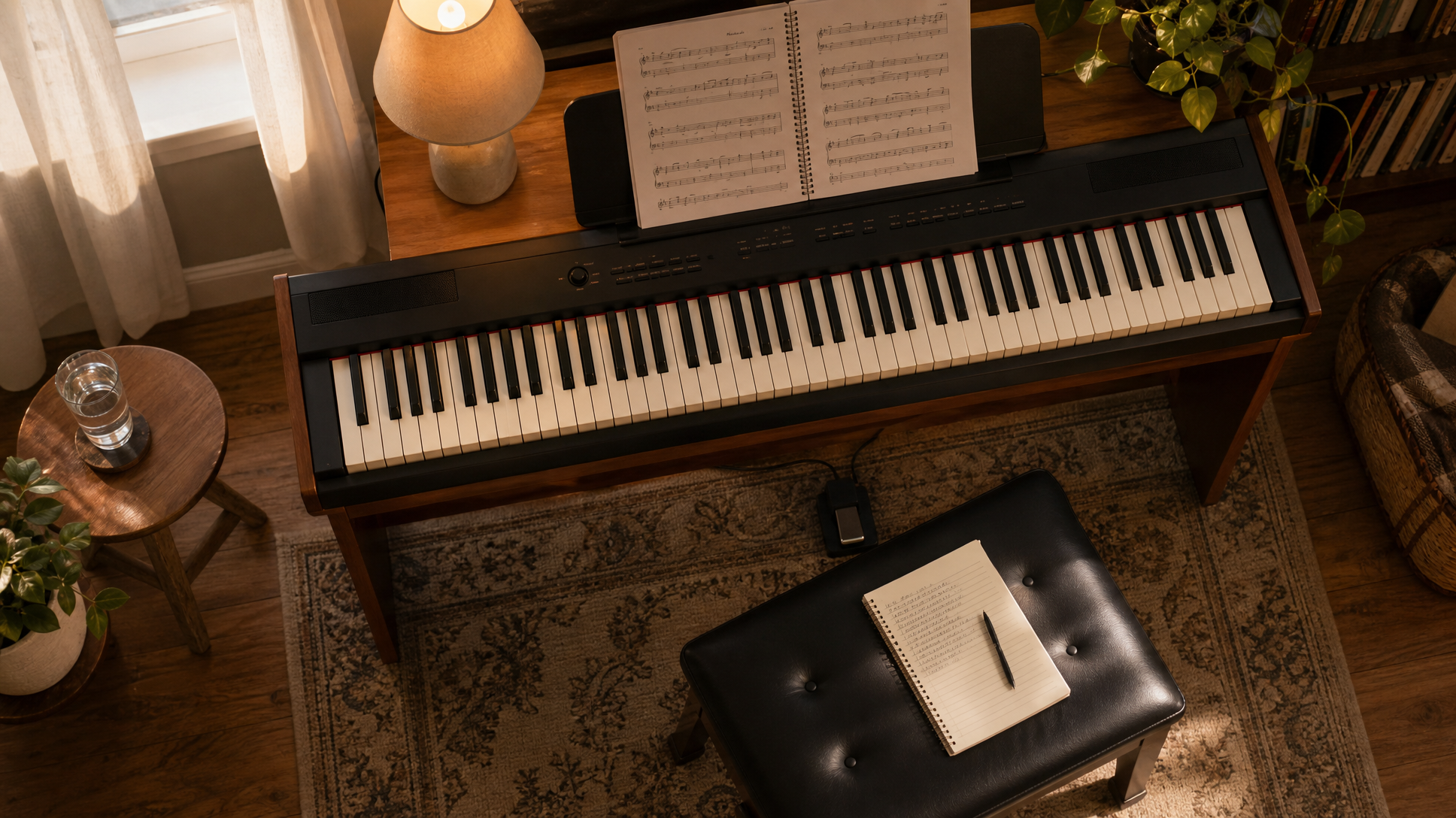
The question nobody answers directly: how much should you spend on a digital piano when you genuinely don't know yet if you'll stick with it?
Most beginner guides skip straight to model recommendations, which is only useful once you've already figured out your number. But that number is the hard part. Spend too little and you end up with something so frustrating to play that you quit — not because piano is hard, but because the instrument is working against you. Spend too much and you've committed serious money to a hobby that might not take hold.
Here's how to think through it honestly, before you ever look at a single product listing.
The Real Question Behind the Budget
Before you land on a number, ask yourself one thing: are you buying this to find out if you like piano, or do you already know you want to play and you're just starting out?
Those are different situations. The first is a trial — you want a low-risk entry point. The second is a commitment at the beginner level — you want something that will genuinely support learning without needing to be replaced in six months. Your answer changes which tier makes sense for you.
Three Tiers, Three Different Instruments
Entry Level: The Trial Instrument
At the lowest tier, you're typically looking at a portable keyboard or a basic digital piano with unweighted or semi-weighted keys. These are lightweight, easy to set up, and often come with built-in lesson features and hundreds of preset sounds you'll probably never use.
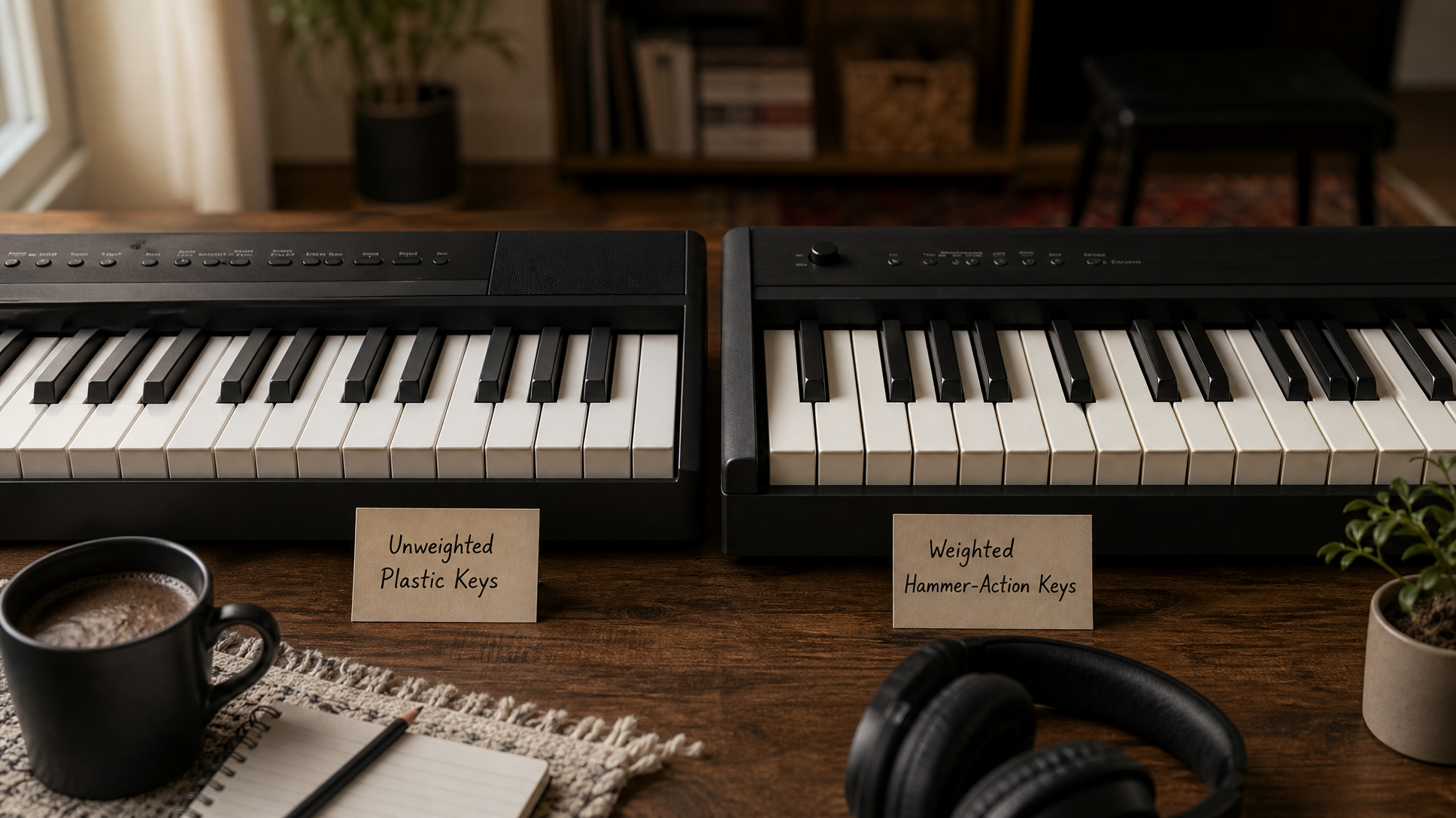
What you give up here is key feel. Unweighted keys respond the same way whether you press them hard or barely graze them — there's no dynamic resistance. That's fine for casual experimentation, but it creates a real problem if you eventually want to develop proper finger technique. Touch sensitivity and weighted keys are how you learn to control your dynamics, which is a foundational piano skill.
The honest trade-off: this tier is good for testing whether you enjoy sitting at a keyboard at all. It's not a great long-term learning tool, and if you do stick with it, you'll likely want to upgrade within a year.
Mid-Range: Where Real Learning Happens
This is the tier most serious beginners should aim for. Instruments here typically offer fully weighted, touch-sensitive keys — meaning the keys push back like an acoustic piano and respond to how hard you press them. That matters enormously for building muscle memory and playing expressively.
You'll also get better speaker quality (so it actually sounds like a piano when you play it), a more convincing grand piano sample, and often a sustain pedal input, which you'll need almost immediately once you start learning pieces.
The honest trade-off: this tier costs more upfront, but it's usually the last beginner purchase you'll make. Most players at this level won't outgrow the instrument for several years, if ever. It's the tier that actually pays off.
Upper Mid-Range: When You Want Acoustic Feel Without the Acoustic Price
At the top of what most beginners would consider, you start getting into graded hammer action — keys that are slightly heavier in the lower register and lighter in the upper register, mimicking how an acoustic piano actually feels across the full range. You also get higher-quality piano samples, better built-in speakers, and sometimes features like Bluetooth connectivity or more detailed sound modeling.
The honest trade-off: this level is genuinely excellent, but it's more than most beginners need on day one. Where it makes sense is if you're an adult learner who's serious about the instrument from the start, or if you've played before and you're returning to it. If you're buying for a child who may or may not continue, this tier is probably more than the situation calls for.
The One Spec That Matters Most for Beginners
If you take nothing else from this post, take this: weighted, touch-sensitive keys are the single most important feature for a beginner digital piano. Not the number of sounds. Not the built-in lessons. Not Bluetooth. Weighted keys.
Here's why. Piano technique is built on how you interact with resistance. When you practice on unweighted keys, your fingers don't develop the strength and control they need for real piano playing. If you ever sit down at an acoustic piano or a higher-quality digital instrument after months on unweighted keys, it feels completely foreign. You've essentially been practicing a different skill.
Touch sensitivity — meaning the instrument responds to how hard you press — is equally non-negotiable. Without it, you can't learn dynamics, which is a core part of musical expression from very early on in lessons.
What Doesn't Matter as Much as You Think
The number of built-in voices (sounds) is almost irrelevant for learning. You'll use the acoustic piano sound. Maybe an electric piano occasionally. The 500-voice preset library is a marketing number, not a learning tool.
Built-in lesson systems are nice but not essential — most beginners learn better with a teacher, an app like Simply Piano, or structured YouTube lessons than with the on-board lesson feature anyway.
Brand names matter less than key action and sound quality. A lesser-known brand with genuinely weighted keys will serve you better than a recognizable name with a flimsy keyboard.
One More Thing Before You Buy
Think about where the piano will live. A compact, portable keyboard fits in a small apartment easily. A full 88-key instrument with a dedicated stand takes up real floor space. Neither is wrong, but knowing where it goes before you buy saves you from a return.
Also consider whether you need a stand and bench — many digital pianos don't include them, and playing hunched over a coffee table is a fast way to develop bad posture and quit. Factor those into your budget if they're not included.
If you want a deeper look at what to check before ordering any instrument online — shipping, return policies, what to look for in a product listing — this guide on ordering instruments online covers it thoroughly.
Stop Deliberating. Start Playing.
The perfect budget is the one that gets you a weighted, touch-sensitive instrument without leaving you so financially stretched that every practice session feels like a sunk cost. For most beginners, that's the mid-range tier. For pure experimenters, the entry level is fine — just go in knowing its limits.
The worst outcome isn't buying the wrong piano. It's spending three more weeks researching instead of playing.
Browse digital pianos at Emusicmart across every budget — with secure checkout and U.S. shipping handled from Houston, Texas.
Frequently Asked Questions
Do I need a full 88 keys as a beginner?
Not immediately, but it's worth aiming for if your budget and space allow. Most beginner pieces stay within a narrower range, so 61 or 76 keys will cover early lessons. That said, 88 keys means you'll never outgrow the instrument as your playing advances, and many weighted-key digital pianos come in the full 88-key format anyway.
Is a digital piano good enough to learn on, or do I need an acoustic?
A quality digital piano with weighted, touch-sensitive keys is genuinely good enough to learn on — most teachers agree on this. The main difference is acoustic feel and the natural resonance of strings, which matters more at advanced levels than at the beginner stage. For home practice, a mid-range digital piano is a practical and effective choice.
What's the difference between weighted and semi-weighted keys?
Weighted keys use a hammer mechanism that gives each key physical resistance similar to an acoustic piano — pressing harder produces a louder note, and the keys push back against your fingers. Semi-weighted keys add spring tension for a slightly more realistic feel than unweighted, but they don't replicate acoustic piano action the same way. For building real technique, fully weighted keys are the better choice.
Should I buy a sustain pedal separately?
Yes, in most cases. Many entry-level and mid-range digital pianos include a sustain pedal input but don't bundle the pedal itself. You'll need one fairly early in your lessons — it's used constantly in piano music. A basic sustain pedal is relatively inexpensive and worth adding to your initial purchase so you're not missing a key tool from day one.