
Cart
0
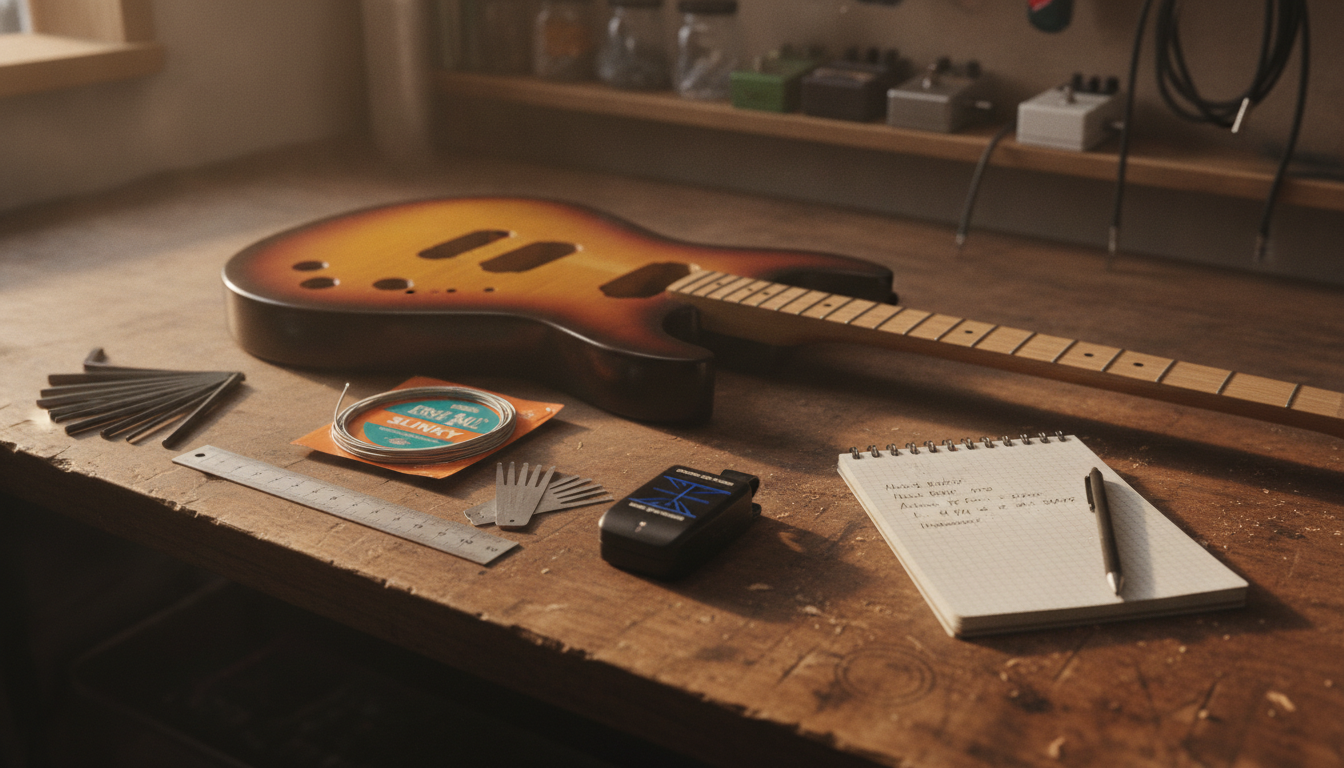
You notice it gradually. The guitar feels stiff up the neck, or a few frets buzz when they shouldn't, or the notes sound slightly off when you play higher up the fretboard. Someone tells you the guitar needs a "setup," and you nod — but you're not entirely sure what that means, and you're definitely not sure if it's worth the shop fee.
Here's what a standard electric guitar setup actually covers, what each adjustment does, and how to tell when your guitar genuinely needs a tech versus when a fresh pack of strings will sort it out.
What a Setup Is (and Isn't)
A setup is a full mechanical tune-up of your guitar's playability. It doesn't change the electronics, refinish the body, or refret the neck. What it does is adjust every physical variable that controls how the instrument feels and plays in tune. A good tech works through these in a specific order because each adjustment affects the next one.
The Adjustments, One by One
Truss Rod
The truss rod is a metal rod running through the inside of the neck. Its job is to counteract the tension of the strings, which constantly pull the headstock forward. Too much forward bow and your strings sit too high in the middle of the neck, making everything feel like a workout. Too much back-bow and you get fret buzz everywhere. A tech checks neck relief — the slight, intentional curve most guitars need — and adjusts the truss rod accordingly. This is the first step because every other measurement depends on the neck being right.
Nut
The nut is the small slotted piece at the top of the fretboard, just below the tuning pegs. If the slots are cut too shallow, the open strings sit too high, making the first few frets feel stiff and causing the guitar to play sharp in the low positions. If the slots are too deep, the open strings buzz against the first fret. A tech files the nut slots to the correct depth for your string gauge. If the nut is worn or cracked, it gets replaced entirely.
Action
Action is the distance between the strings and the frets — specifically measured at the 12th fret. High action makes the guitar hard to play and can cause pitch problems because you're bending the string slightly just to fret a note. Too low and you get fret buzz, especially when you play hard. Action is adjusted at the bridge saddles, and the right height depends on your playing style. A fingerpicker and a heavy strummer need different action.
Intonation
This is the one most players don't understand until they hear the problem. Intonation determines whether a fretted note is in tune relative to the open string. The test is simple: play the 12th fret harmonic, then fret the 12th fret normally. If the fretted note is sharp, the saddle needs to move back. If it's flat, the saddle moves forward. A guitar with bad intonation sounds increasingly out of tune as you move up the neck, even if the open strings are perfectly tuned. No amount of tuning the headstock fixes this.
Pickup Height
Pickups work by sensing the vibration of the strings through a magnetic field. Too close, and the magnets actually pull on the strings, killing sustain and causing weird tuning artifacts. Too far away, and you lose output and clarity. Pickup height is usually the last thing a tech adjusts, and it's often overlooked by players who do partial setups themselves. Getting it right makes a noticeable difference in tone without touching the electronics at all.
String Change
Most shops include a fresh set of strings as part of a setup, because all the measurements are done with new strings at full tension. Some charge for strings separately. Either way, the setup measurements are only accurate for the gauge of string installed — if you switch from nines to elevens later, the whole thing shifts and you'd need to go through the process again.
What a Setup Typically Costs
Prices vary by region and shop, but a standard electric guitar setup at most independent guitar shops in the U.S. runs somewhere in the range of $50 to $100, strings included. Boutique shops and luthiers in major cities often charge more. Chain music stores vary. If a shop quotes you significantly below that range, ask what's actually included — some "basic setups" skip intonation or don't touch the nut.
A setup makes the most sense on a guitar you already like and play regularly. If the guitar is worth less than the cost of the setup, it's worth pausing to think about whether the money is better spent on an upgrade.
When You Can Skip the Shop
Not every guitar that feels off needs a full professional setup. Here's when you can handle it yourself or hold off entirely:
- You just changed string gauges. Going up or down in gauge changes the tension on the neck and shifts everything. Start with a fresh setup before deciding the guitar plays badly.
- The strings are old. Dead strings go false — they don't intonate correctly and they feel stiff. Swap the strings first. You might be surprised how different the guitar feels.
- The weather changed drastically. Wood moves with humidity and temperature. A guitar that played great in summer can feel tight in winter. If the change is recent, give it a few days in a stable environment before assuming something is wrong.
- You only need one adjustment. If you know the action is just slightly high and you're comfortable adjusting saddle height, that's a five-minute job with the right tools. You don't need to pay for a full setup to raise or lower a saddle by half a turn.
That said, if the guitar has never had a setup, if you bought it new and it sat in a warehouse before shipping, or if it just doesn't feel right no matter what you try — a proper setup is almost always worth it. Most guitars that leave factories aren't set up for optimal playability. They're set up to pass a basic quality check.
Setup Tools Worth Having
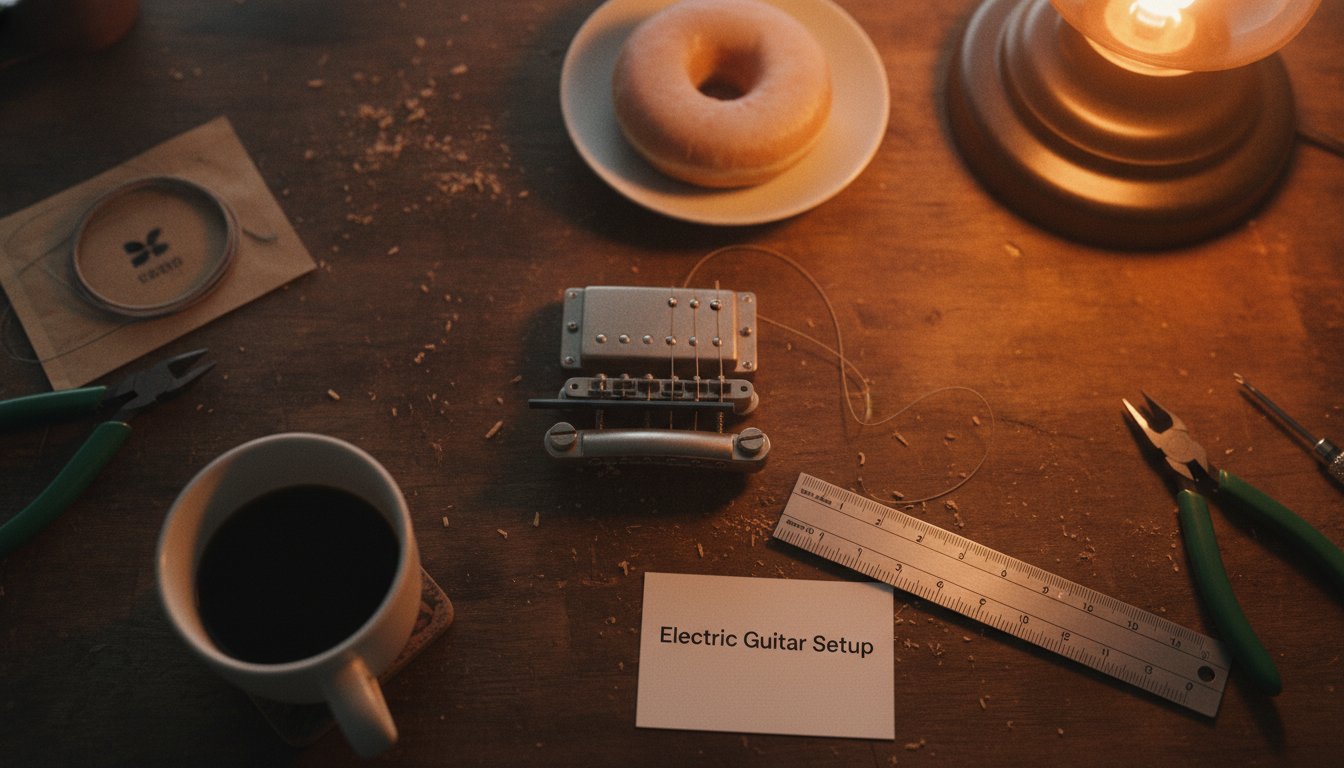
If you want to handle basic adjustments yourself, you don't need much: a set of hex (Allen) wrenches in the right sizes for your bridge and truss rod, a decent chromatic tuner, a feeler gauge for measuring neck relief and action, and a string action ruler. Having these on hand means you can make small tweaks between professional setups rather than running to a shop every time something shifts slightly.
Whether you're setting up a new guitar, maintaining one you've played for years, or shopping for gear to make the process easier, Emusicmart carries a wide range of guitars, strings, and accessories — all shipping within the U.S. And if you're still weighing whether to buy online, this guide on ordering instruments online walks through exactly what to look for before you commit.
A well-set-up guitar doesn't just play better — it makes you want to play more. That's worth the hour and the shop fee, at least once.
Frequently Asked Questions
How often does an electric guitar need a setup?
Most players who play regularly benefit from a setup once or twice a year. Seasonal changes in humidity and temperature cause the wood in the neck to shift, which can affect playability even on a well-maintained guitar. If you notice buzzing, stiffness, or intonation problems, that's usually a sign it's time — don't wait for a scheduled interval.
Does a new guitar need a setup?
Often, yes. Factory setups are designed to meet a minimum playability standard, not to be optimized for any particular player. Guitars also travel through warehouses and shipping environments where temperature and humidity vary, which can shift the neck. Getting a setup on a new guitar — especially one bought online — is a smart first step before you decide whether you like how it plays.
Can I do a guitar setup myself as a beginner?
Some parts of a setup are beginner-friendly — adjusting saddle height or swapping strings, for example. The truss rod is the one adjustment beginners should approach carefully, since over-tightening it can damage the neck. If you're new to setups, start by learning to adjust action and intonation, and leave truss rod work until you're comfortable or have watched someone do it in person. There are solid instructional resources available, but take it slow.
Does changing string gauge require a new setup?
Yes, it typically does. String gauge directly affects the tension pulling on the neck, which changes neck relief. It also affects action and intonation. If you switch from a lighter gauge to a heavier one (or vice versa), plan on at least checking — and likely adjusting — the truss rod, action, and intonation to match the new strings.