Cart
0
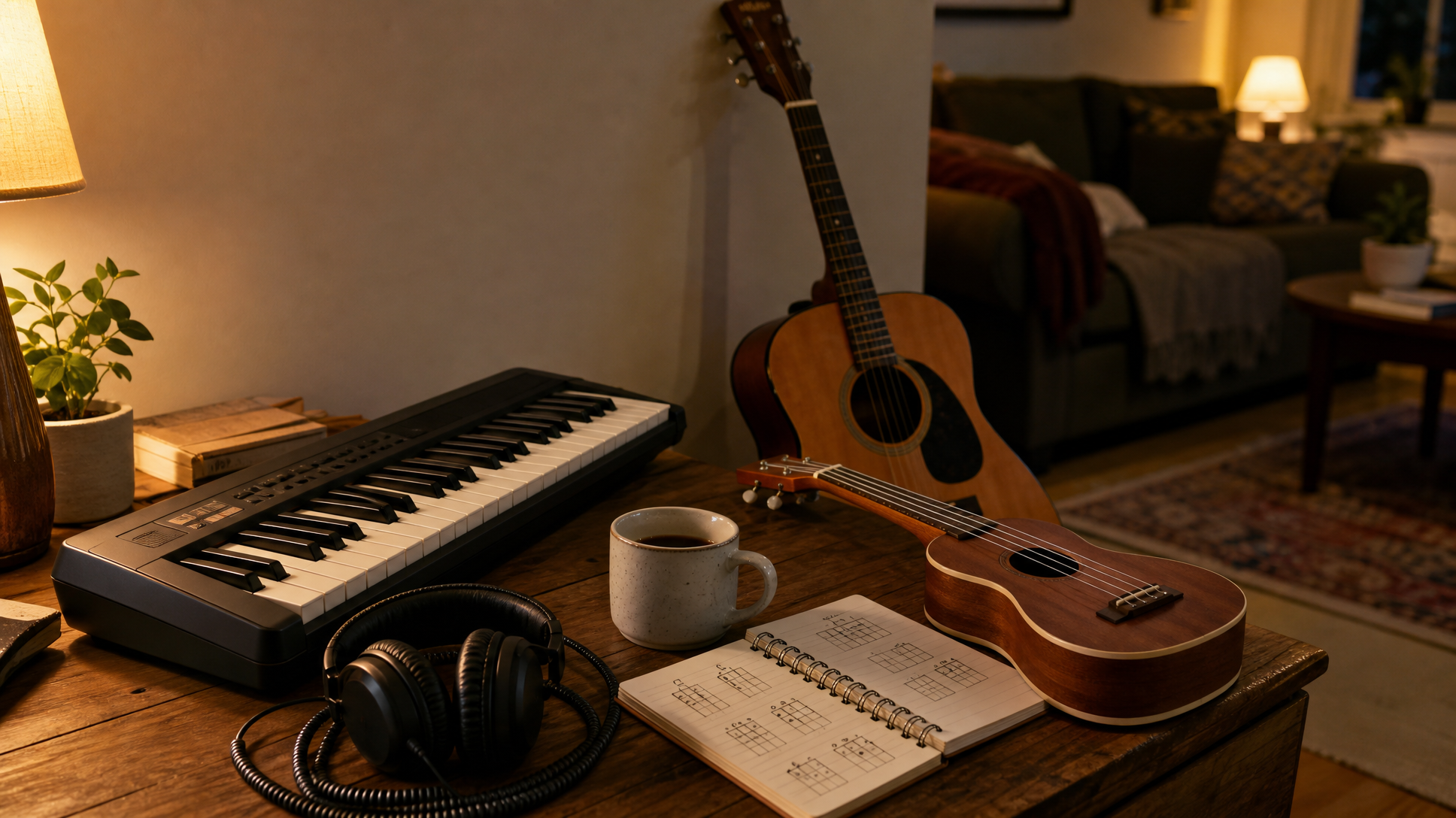
You bought a guitar. You watched YouTube tutorials for a week, got through the open chords, then hit a wall somewhere around F major and quietly put it back in the corner. Or maybe you stuck with it for two months, life got busy, and when you came back it felt like starting from scratch. Now you're wondering: was it the instrument, or was it me?
Honestly? It was probably neither. Most beginner advice is written for a fictional adult with two hours a day, zero hand pain, and infinite patience for sounding bad. Real adult beginners have jobs, stiff fingers, and about twenty minutes on a good night. The instrument you choose matters more than most guides admit — not because some are easier in some abstract sense, but because some reward inconsistent practice better than others, and some get you to a satisfying sound faster than others.
Here's a clear-eyed look at the most common adult starter options — what they're actually like to learn, and which one might fit how you actually live.
Acoustic Guitar: The Default Choice (With a Few Real Caveats)
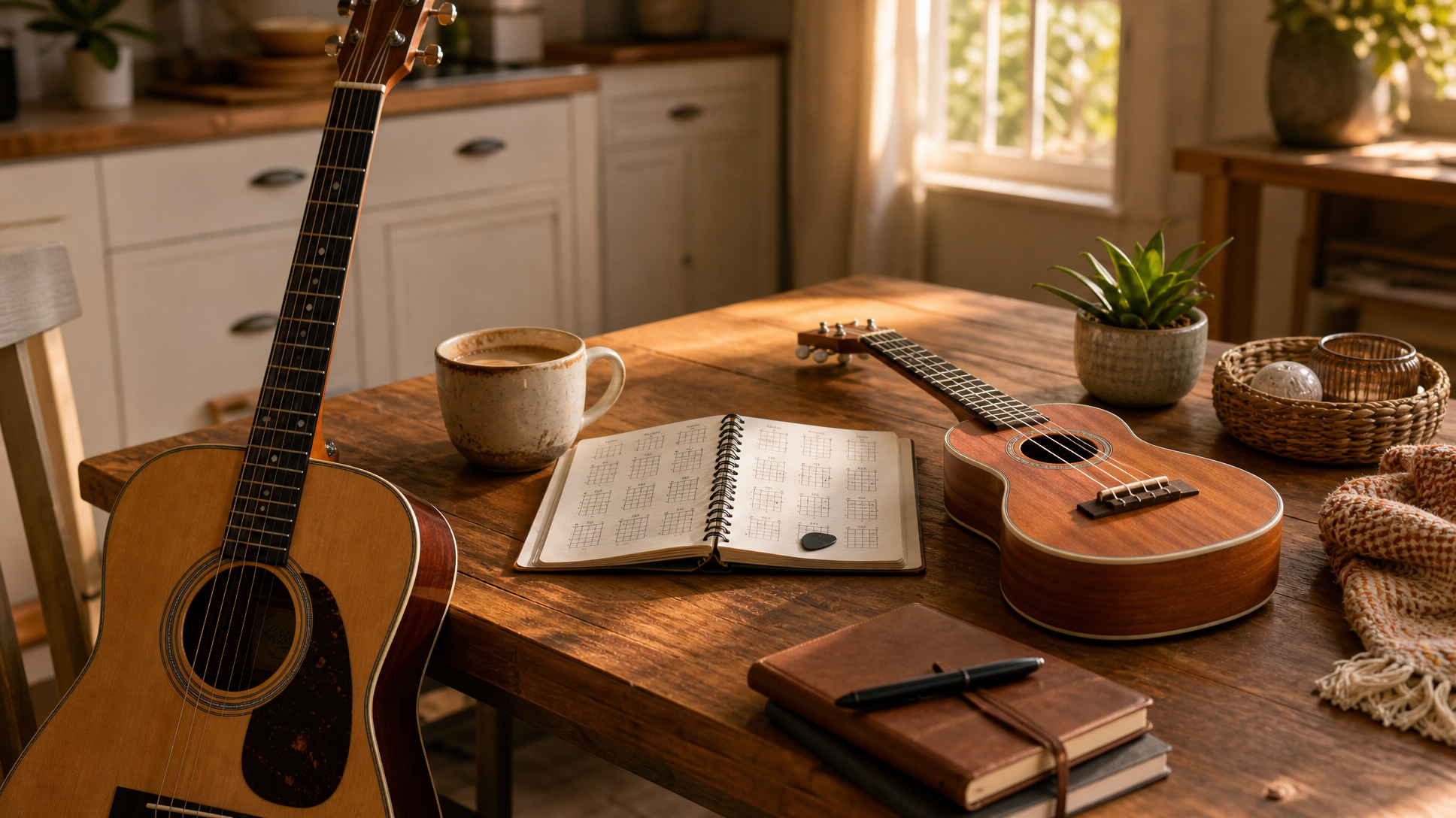
Guitar is the first thing most adults reach for, and it's not a bad instinct. The repertoire is enormous, the community is massive, and a decent acoustic doesn't require an amp or any extra gear to get started. But there's a reason so many acoustic guitars end up in corners.
The first month on acoustic guitar is genuinely uncomfortable. Steel strings press hard against fingertips that haven't built calluses yet, and the open chords everyone starts with — especially F and B minor — require hand positions that feel unnatural for weeks. If you skip a few days of practice, your fingers soften and you're back to square one on the pain curve.
That said, guitar rewards you quickly in one specific way: three or four chords unlock hundreds of songs. If you can get through the first six weeks, the payoff curve gets much better. The key is the instrument itself — a poorly set-up beginner guitar with high action (the distance between strings and fretboard) makes everything harder than it needs to be. If your guitar feels like you're fighting it, that's often a setup problem, not a skill problem.
Best for: Adults who are genuinely motivated by the guitar's repertoire and willing to push through a real physical adjustment period. Not ideal if you have hand or wrist issues, or if you need to feel good quickly to stay motivated.
Bass Guitar: The Underrated Adult Starter
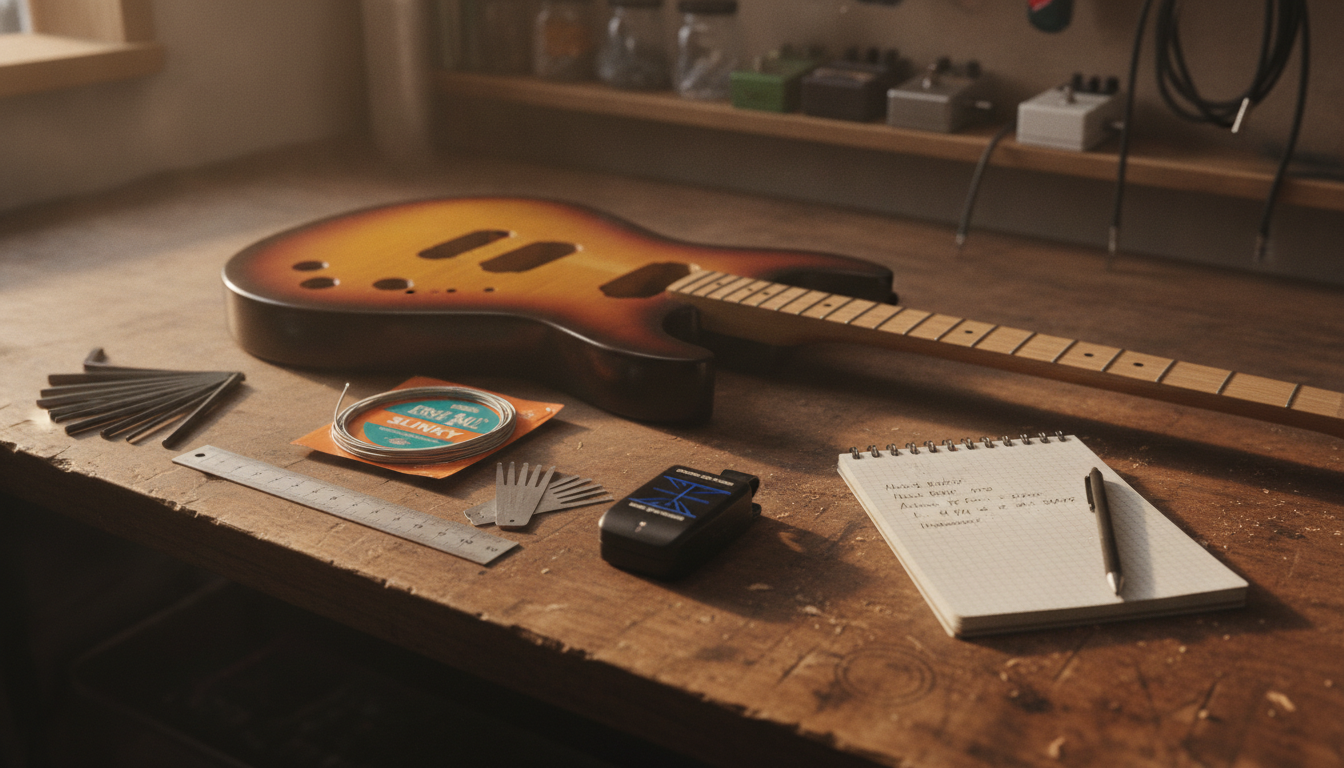
Bass gets overlooked in beginner conversations, which is a shame, because it's quietly one of the best instruments for adults starting from scratch.
The neck is wider and the strings are thicker, but you're almost always playing single notes rather than chords — which means you're not wrestling with complex finger positions from day one. You can learn a recognizable bassline in a single sitting. The physical demand is real but different from guitar; it's more about left-hand strength over time than immediate fingertip pain.
The catch: you need an amp, or at least headphones and a small practice amp, which adds to the startup cost. And playing bass solo is less immediately satisfying than strumming a guitar — it's an instrument that really comes alive when you're playing with other music, even just a backing track. If you're the kind of person who likes playing along to songs rather than sitting alone practicing scales, that's actually a feature, not a bug.
Best for: Adults who want to feel competent quickly, who like the idea of playing with others or along to recordings, and who aren't put off by needing a small amp to get started.
Ukulele: Fast Gratification, Real Limitations
The ukulele has a reputation as a toy instrument, which is unfair — but it's also not wrong that it's the easiest of this group to get a pleasant sound out of in week one. Nylon strings are gentle on fingers, the neck is short, and four basic chords cover a surprising amount of ground. You can strum something that sounds like music within a few days.
The honest limitation is repertoire and ceiling. The ukulele is genuinely fun, but if you're hoping to eventually play a wide range of music or take the instrument seriously, you'll hit a ceiling faster than with guitar or keys. Some adults find that ceiling liberating — they just want to play songs at the campfire, not become musicians. Others find it frustrating after six months.
Know which one you are before you commit. If your goal is pure enjoyment and low friction, ukulele is excellent. If you're hoping to eventually do more, you may find yourself shopping for a guitar anyway.
Best for: Adults who want the fastest path to playing actual songs, have hand or wrist sensitivity, or just want a low-pressure musical hobby without a long learning curve.
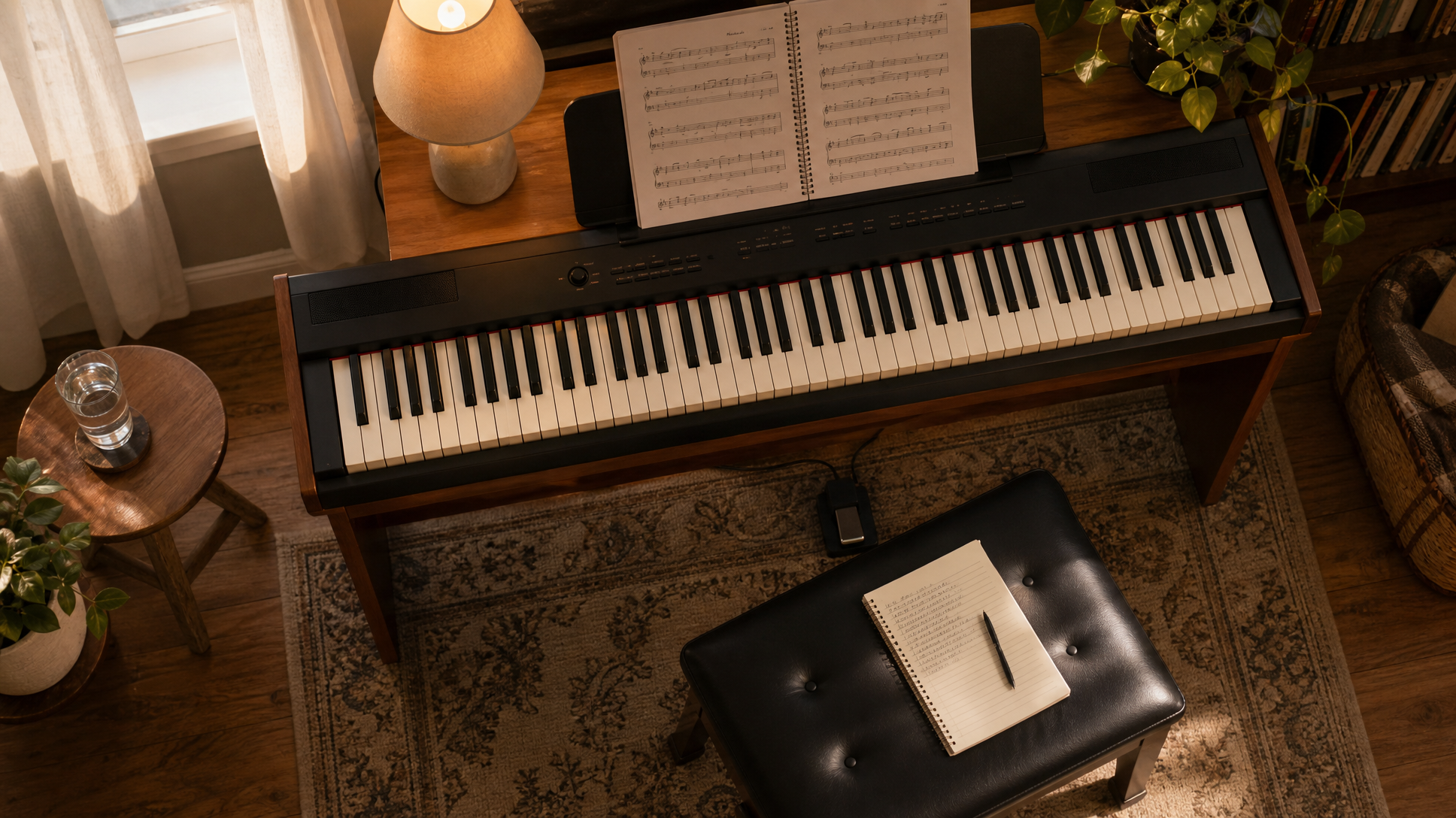
Digital Keyboard: The Most Forgiving Instrument for Inconsistent Schedules
Here's the argument for keyboard that most beginner guides bury: the piano layout is the most visually logical of any common instrument. Notes go left to right, low to high, in a straight line you can see. There's no guessing where a note is. That visual clarity makes it much easier to return to after a week away — you haven't lost your place the way you might on guitar.
A digital keyboard also doesn't go out of tune, doesn't require you to build calluses, and lets you practice silently through headphones at midnight without waking anyone up. For adults with busy, unpredictable schedules, that last point is underrated.
The learning curve is real in a different way: reading music notation is genuinely useful for piano in a way it isn't for guitar, and two-hand coordination takes time. But modern apps and video lessons have made it much more accessible to learn by ear and chord first, and delay the notation side until you're ready.
The startup cost for a decent beginner keyboard — one with weighted or semi-weighted keys — is worth thinking about. Unweighted mini-keys feel nothing like a real piano and will limit your technique if you ever want to progress. It's worth getting something with at least semi-weighted keys from the start.
Best for: Adults with inconsistent schedules, anyone who lives with other people and needs to practice quietly, and people who want a strong musical foundation that transfers to other areas of theory and composition.
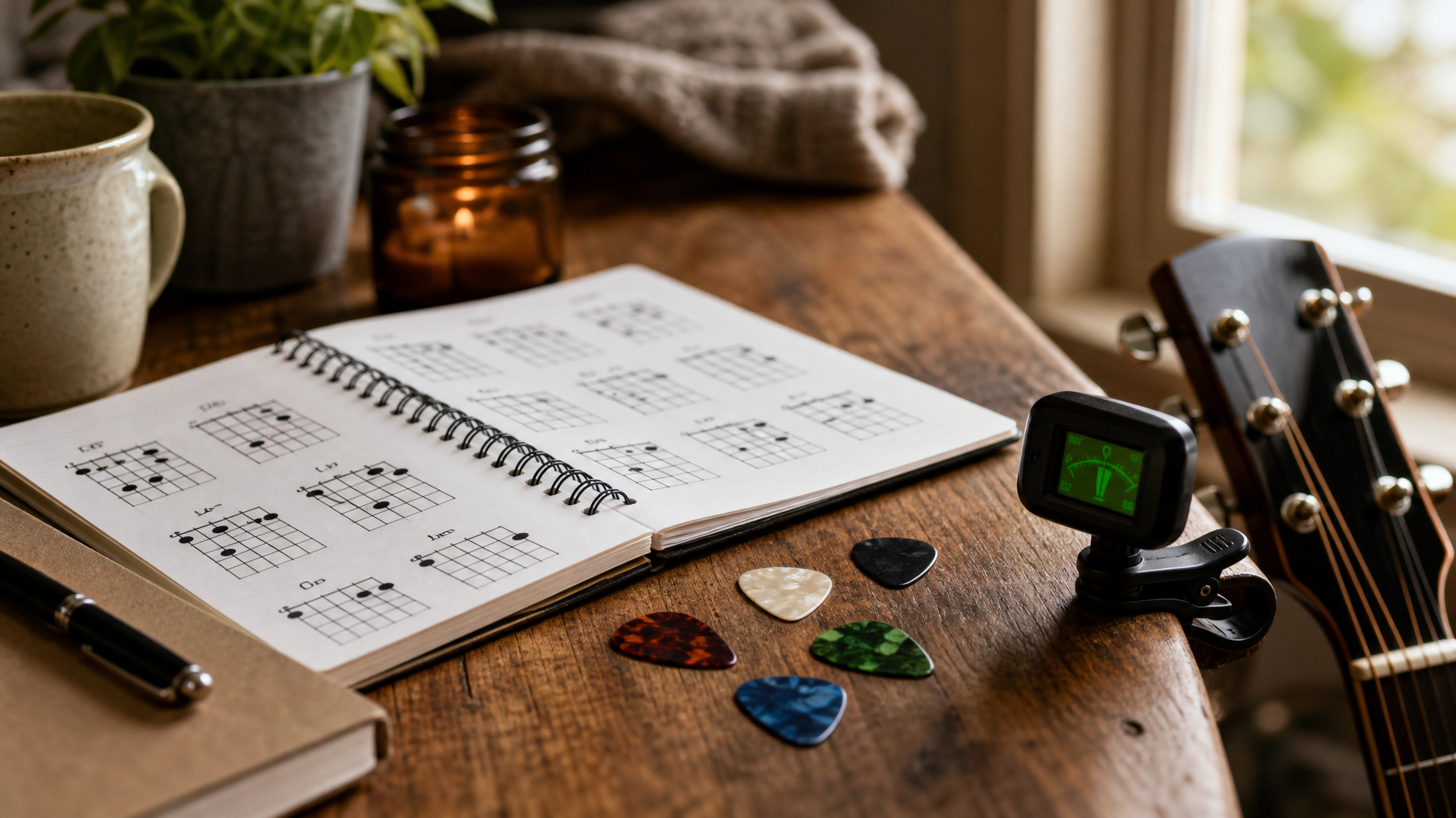
The Question Nobody Asks: What Keeps Adults Playing?
The instrument matters, but the bigger variable is this: can you get to something that sounds like music within the first two or three weeks? Adults quit when early practice feels like pure work with no payoff. Children can tolerate that longer because they're told to. Adults vote with their time.
So pick the instrument where the first month's payoff matches your patience. If you need to feel good quickly, ukulele or bass. If you can handle a harder start for a bigger long-term range, guitar or keyboard. And don't underestimate the role of the instrument's quality — a cheap, poorly made beginner instrument creates unnecessary friction that gets blamed on the player.
If you're also thinking through what to look for when buying online — things like setup quality, return policies, and what specs actually matter for beginners — this guide on ordering instruments online covers the practical side of that decision.
The instrument you stick with is the right one. Give yourself a realistic shot at sticking with it by starting with something that fits how you actually live — not how you imagine you'll practice.
Find your starting point at Emusicmart — instruments for adults across every budget, shipped across the U.S.
Frequently Asked Questions
Is it too late to learn an instrument as an adult?
Not even close. Adults actually have real advantages: you understand how to practice deliberately, you can connect emotionally to the music you want to play, and you're choosing the instrument for your own reasons — not because a parent signed you up. The main challenge is patience during the early weeks, which is exactly why picking the right instrument for your temperament matters.
How much should I spend on a beginner instrument?
Enough to get something that doesn't fight you. The very cheapest instruments in any category often have quality control issues — tuning instability, high string action, unweighted keys — that make learning harder than it should be and get blamed on the player. You don't need a professional instrument, but mid-range beginner options tend to hold up better and stay playable as your skills grow. If budget is a concern, it's often better to buy one solid mid-range instrument than two cheap ones.
What if I tried guitar before and quit — should I try again or switch?
Worth asking why you quit. If it was physical discomfort that never got better, it might be worth trying a nylon-string classical guitar (gentler on fingers) or switching to keyboard or ukulele. If it was boredom or lack of structure, the instrument probably wasn't the problem — a clearer learning path and more realistic expectations might be all you need for a second attempt. Quitting once doesn't mean guitar is wrong for you.
Do I need lessons, or can I learn on my own?
You can make real progress self-taught, especially with the quality of video lessons and apps available now. But a few sessions with a teacher early on — even just two or three — can save you from developing technique habits that are hard to unlearn later. Think of it less as committing to weekly lessons and more as getting a solid foundation check before you go independent.