Cart
0
Essential Guide to Portable Audiophile Setup and Beginner Music Production Gear
Master the art of portable high-fidelity listening and kickstart your music production journey with this comprehensive guide. Discover core gear recommendations, setup tips, and practical advice to build a versatile audio system that travels with you and supports your creative workflow.111
Key Takeaways
- Building a portable audiophile setup requires quality IEMs/headphones, a capable DAC/amp, a hi-res source device, and reliable accessories.
- Beginner music production gear should focus on a solid audio interface, neutral studio headphones, a versatile microphone, and user-friendly MIDI controllers.
- Combining audiophile listening gear with production tools creates a dual-purpose system that maximizes portability and functionality.
- Consistent practice, finishing projects, and networking are essential to advancing your music production career.
- Avoid overspending on hype or unnecessary accessories—prioritize sound quality, comfort, and simplicity.
Table of Contents
- 1. Portable Audiophile Setup Essentials
- 2. Beginner Music Production Starter Gear
- 3. Integrating a Dual-Purpose Audiophile and Production Setup
- 4. Building Skills and Advancing Your Career
- 5. Common Mistakes to Avoid
- FAQ
1. Portable Audiophile Setup Essentials
For passionate music lovers, having a portable audiophile setup means enjoying music with rich detail and clarity anytime, anywhere. This section outlines the key components needed to build a travel-friendly audio system that stays true to the artist's intent while also offering practical use for light production tasks.
Why Portable Audiophile Gear Matters
High-fidelity portable gear reveals subtle nuances, tight harmonics, and clean dynamics often lost in basic earbuds or phone speakers. A balanced setup not only improves personal listening but also provides a reliable reference for casual production and mixing.
Core Components of a Portable Audiophile Chain
- High-Quality IEMs or Headphones: Primary listening tools with neutral or slightly warm sound signatures, comfortable fit, and detachable cables.
- Portable DAC (Digital-to-Analog Converter) and Amplifier: Enhances audio quality by converting digital signals cleanly and providing sufficient power output.
- Source Device: Smartphones, tablets, or dedicated digital audio players (DAPs) supporting hi-res formats like FLAC, ALAC, and WAV.
- Reliable Cables and Accessories: Stable, lossless connections ensure the best signal integrity on the move.
- Celebrate the season with savings — get 5% off your order using code EXCLUSIVE5 at checkout
Choosing the Right IEMs and Headphones
Recommended beginner IEMs include:
- Audiocular Lex
- KZ EDX Pro
- KZ Castor Pro (for a bass-enhanced profile)
- TANCHJIM BUNNY
These models offer impressive sound quality at friendly price points, making them ideal entry points for portable audiophile gear.
Portable DAC and Amplifier Essentials
A portable DAC/amp combo substantially improves audio by bypassing weak internal phone or laptop DACs and amps. Key features to prioritize:
- USB-C or Lightning input compatibility depending on your playback device.
- Support for 24-bit/96–192 kHz hi-res audio formats.
- Low output impedance (<1 Ω) for sensitive earphone pairing.
- At least 100mW output power at 32 Ω for driving various headphones.
Budget-friendly DAC/amps worth considering include:
- Audiocular D07
- Audiocular D08
- QKZ TC Max
- KZ AM01
Source Devices That Unlock Hi-Res Audio
Choose playback devices that support popular hi-res formats and allow disabling of effects like EQ and spatial audio for a clean digital signal. Popular streaming platforms such as Apple Music, Tidal, and Qobuz offer hi-res and lossless tiers to maximize sound quality.
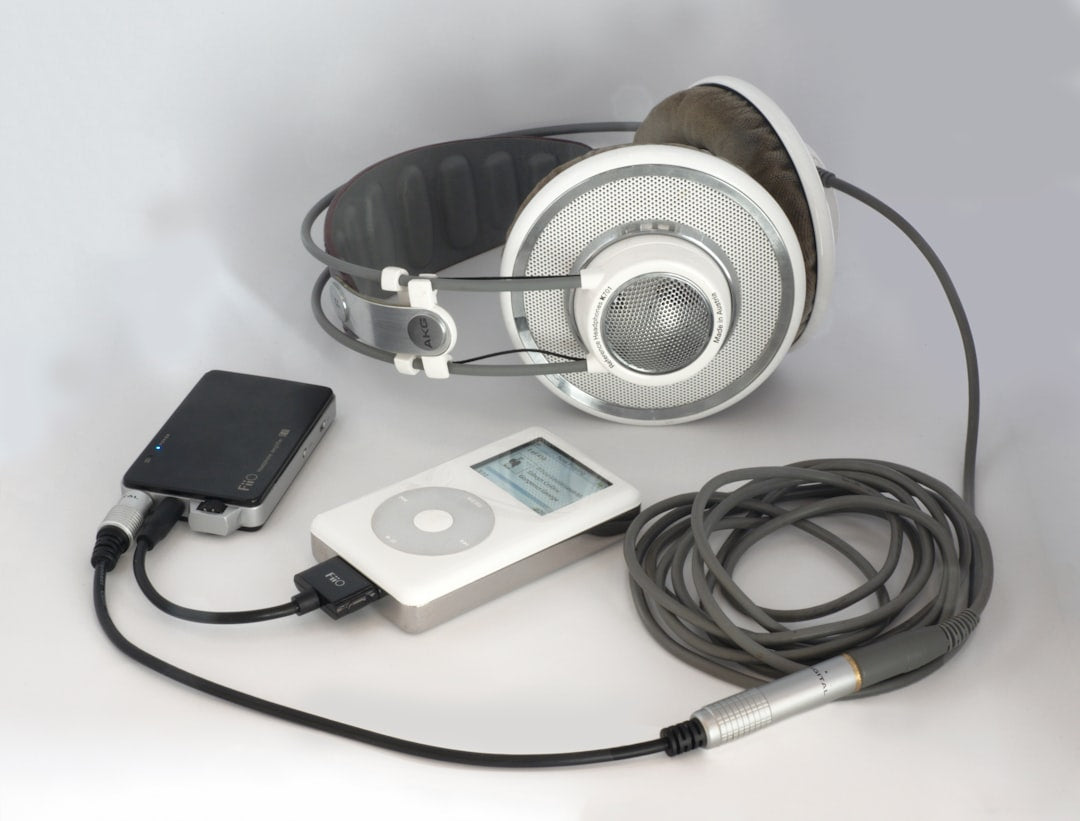
Putting It Together: A Typical Portable Audiophile Chain
Example setup:
Smartphone (or DAP) → Portable USB DAC/amp → Neutral IEMs → Your ears
This streamlined chain delivers detailed, accurate sound for enjoyment and on-the-go mixing checks.
For expert advice, visit Moon-Audio’s expert advice blog.
2. Beginner Music Production Starter Gear
Starting out in music production is easier than ever with affordable, versatile gear options. Focus on the essentials that provide a strong foundation for recording, arranging, mixing, and monitoring.
Your Computer or Tablet: The Production Brain
Use the computer or tablet you already own. Most modern laptops and desktops run popular DAWs smoothly. iPads with keyboard accessories also work well for mobile production—especially for electronic music and beat-making.
Audio Interface: The Heart of Your Studio
An audio interface connects your instruments, microphones, and headphones to your computer or tablet. Look for beginner-friendly interfaces with:
- Two combo XLR/TRS inputs for microphone and instrument flexibility
- Clean mic preamps to capture accurate sound
- 48V phantom power for condenser microphones
- Monitor and headphone outputs for comfortable real-time listening
Popular models include:
- Focusrite Scarlett 2i2
- Audient iD Series
- Arturia Minifuse 2
Studio Headphones: Critical for Mixing and Monitoring
Choose neutral or flat-response closed-back headphones for accurate mixing and isolation during recording sessions. Avoid Bluetooth headphones to prevent latency and coloration issues.
Recommended:
- Entry-Level: Audio-Technica ATH-M20X
- Mid to High-End: Audio-Technica ATH-M50X
Microphones: Start Simple, Build from There
Dynamic Mics: Reliable and forgiving, ideal for untreated rooms. Examples: Shure SM58, SM57.
Condenser Mics: Provide detailed sound but require treated rooms and phantom power. Example: AKG C414.
Begin with a dynamic microphone, then upgrade as your recording environment and needs evolve.
MIDI Controllers: Unlock Your Creativity
MIDI controllers let you interact in real time with virtual instruments and software.
- Keyboard Controllers: 25–49 keys, velocity-sensitive, with knobs or pads for expressive control.
- Grid Controllers: Devices like the Novation Launchpad offer tactile interaction for drum programming and live performance.
Choose based on your creative style—keyboard playing or pad-driven beatmaking.
Software Essentials: DAWs, Synths, and Samples
Popular beginner-friendly DAWs include:
- Logic Pro (Mac only)
- FL Studio
- Ableton Live
- Reaper
- Studio One
Start with native synths and effects before expanding. Consider adding powerful synths like Serum, Massive, or Sylenth1 as you grow. Explore sample services such as Splice, Noizz, or Loopmasters for affordable royalty-free sounds.
3. Integrating a Dual-Purpose Audiophile and Production Setup
Smart integration of audiophile and production gear helps you travel lighter and maintain consistent sound quality whether listening or creating.
- Use your desktop audio interface as a DAC and headphone amp during production sessions.
- Switch to your portable DAC/amp paired with neutral IEMs for high-fidelity listening on the go.
- Choose headphones and IEMs with neutral sound that work well for both critical monitoring and casual enjoyment.
- Focus on finishing projects instead of accumulating excessive plugins or samples early on.
4. Building Skills and Advancing Your Career
Phase 1: Learn and Practice
- Become proficient in your DAW: MIDI sequencing, editing, effects, and mixing.
- Create short tracks regularly to develop arrangement and production skills.
Phase 2: Build a Portfolio
- Complete and polish 5–10 tracks that showcase your style.
- Share your music on platforms like SoundCloud, Bandcamp, or YouTube.
- Seek constructive feedback from peers to improve your craft.
Phase 3: Monetize Your Music
- Offer mixing and production services locally or online.
- Sell instrumentals or beats on music marketplaces.
- Pitch music for sync licensing, commercials, or game soundtracks.
- Collaborate as a remote session musician or co-producer.
Improving your monitoring environment often boosts your mixes more than frequently upgrading audiophile hardware.
Formal Education and Networking
Consider attending a dedicated music production school like the Atlanta Institute of Music and Media (AIMM) for industry-focused training and networking. Build a professional online presence with a personal website and active social media to help industry peers discover your work.
5. Common Mistakes to Avoid
- Over-investing in expensive cables and accessories instead of prioritizing better core gear.
- Buying into hype-driven gear instead of choosing accurate, comfortable, and reliable equipment.
- Building an overly complex setup too early, which can hinder progress and creativity.
FAQ
Q1: Can I use consumer earbuds for critical music production?
Consumer earbuds typically have colored sound signatures and limited frequency response, making them unsuitable for mixing or mastering. Invest in neutral studio headphones or reference IEMs for best results.
Q2: What is the difference between dynamic and condenser microphones?
Dynamic mics are rugged, less sensitive, and great for untreated rooms or loud sources. Condenser mics offer detailed, accurate sound but require 48V phantom power and quieter, treated environments.
Q3: Do I need a dedicated DAC if my smartphone supports hi-res audio?
Most smartphones have underpowered, less clean DACs and amplifiers internally. A dedicated portable DAC/amp improves sound clarity, dynamics, and headphone drive capability significantly.
Q4: Which DAW is best for beginners?
There’s no one-size-fits-all answer. Common beginner-friendly DAWs are Logic Pro (Mac), FL Studio, Ableton Live, Reaper, and Studio One. Try demos to find the interface and workflow that suit you.
Q5: How important is monitoring environment versus gear?
A well-treated room and proper speaker or headphone placement often improve mix accuracy more than expensive equipment upgrades. Focus on room acoustics and reliable monitoring before upgrading gear.
Ready to build your ideal audio and production setup? Explore curated gear guides and tailored shopping lists at Emusicmart’s resource center.