Cart
0
Most players spend months researching their next guitar or amp, then grab whatever picks came in the starter pack and leave the original tuners on for years. It's a completely backwards approach. The accessories that touch your strings every single time you play — picks, strings, tuning machines — have a direct and immediate effect on your tone, feel, and tuning stability. A new guitar won't fix a bad pick grip. Fresh strings will.
This isn't about spending more money. It's about spending it in the right places. Here are five small upgrades that actually move the needle, with real products to show you what each category looks like when you get it right.
1. Your Pick Material Changes Your Tone More Than You Think
Celluloid picks have been around since the early days of electric guitar — and there's a reason they never went away. The material has a slight give to it that produces a warmer, rounder attack compared to stiffer synthetics. If your playing feels harsh or brittle through a clean amp, your pick is worth examining before you touch the EQ.
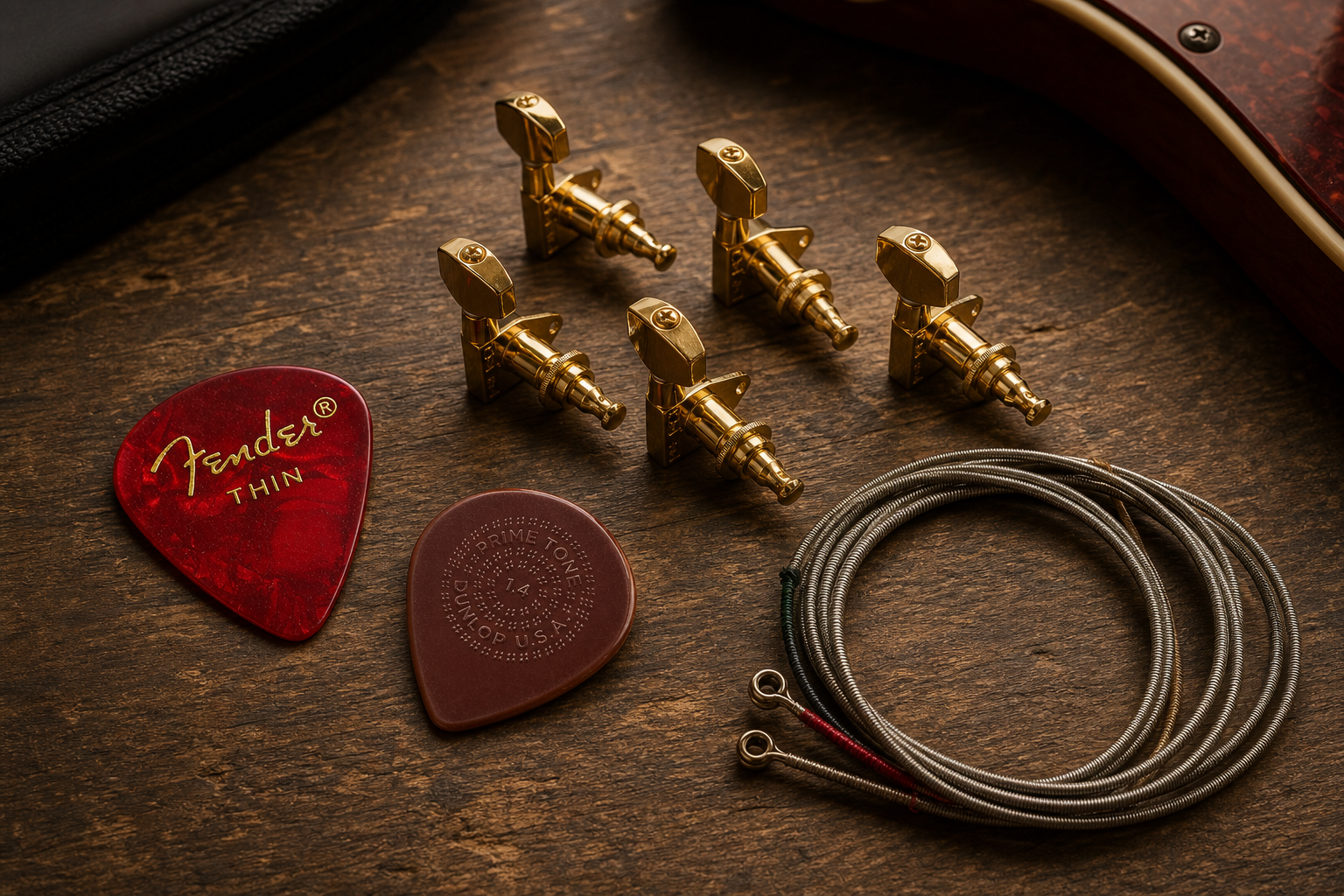
The Fender Premium Celluloid Guitar Picks 351 Shape, Red Moto, Thin, 12-Pack are a straightforward example of this. The 351 shape is Fender's most popular design — a classic teardrop that works across rhythm and lead playing — and the thin gauge keeps strumming effortless without fighting the strings. The red moto finish gives them a distinctive marbled look that makes them easier to spot on a dark stage floor. At a 12-pack, you're covered for a while.
If you've only ever used generic nylon picks, the difference in feel here is immediate.
2. Thickness and Shape Together — Not Just One or the Other
Most players adjust pick thickness when they want more control, but they forget that shape matters just as much. A smaller, more pointed tip gives you a faster, more precise attack on individual strings. That's the whole logic behind the Jazz III shape, which has become a go-to for lead players and anyone doing technical work.
The Dunlop Primetone Jazz III 1.4mm Sculpted Plectra (Grip), 3 Pack takes that shape and makes it out of Ultex — a material known for durability and tonal clarity — with hand-burnished sculpted edges that let the pick release off the string cleanly. The low-profile grip on the surface means it stays put even during fast passages. At 1.4mm, this is a stiff pick, built for players who want precision and definition rather than a forgiving flex.
It's a very different tool from a thin celluloid pick, which is exactly the point. Knowing what each pick actually does lets you choose intentionally instead of just grabbing whatever's closest.
3. Tuning Machines: The Most Overlooked Upgrade on an Acoustic
If your acoustic guitar slips out of tune mid-song — especially on the high strings — your first instinct is probably to blame the strings or the nut. Sometimes that's right. But worn or poorly manufactured tuning machines are a common culprit that players rarely think to replace.
The Ping Acoustic Guitar Tuning Key (P2651) is an individual geared tuning machine in a gold finish, which means you can replace a single faulty peg rather than swapping the whole set. The gold hardware gives it a clean, warm look that works well on natural-finish and sunburst acoustics. If one of your tuners has developed slop or inconsistency, replacing it individually is a practical and cost-effective fix before assuming the whole headstock needs work.
It's the kind of repair that takes twenty minutes and can make an otherwise solid guitar feel like a different instrument.
4. Bass Strings: The Difference Between Muddy and Present
Bass players often leave strings on far longer than guitarists do — partly because the strings are more expensive, partly because the degradation is more gradual and easier to ignore. But dead bass strings don't just sound dull; they make the whole band mix muddier. The bass loses its definition in the low-mids, and you end up fighting for space in the mix that fresh strings would give you for free.
The Rotosound RS55LD Linea Pressure Wound Bass Guitar Strings (45 65 85 105) are a stainless steel pressure wound set — a construction method that gives you the brightness and mass of a roundwound string with a smoother surface feel. Rotosound designed this type of string in the mid-1970s, and the Solo Bass 55 series has been a working player's choice since then. The pressure wound process reduces finger noise, which makes them particularly good in the studio, and they work well on fretless basses too. The gauge set — 45, 65, 85, 105 — is a standard long-scale configuration that covers most 4-string basses.
If you've been playing on the same strings for more than a few months, this is probably the fastest tonal improvement available to you right now.
5. Stop Treating Accessories as an Afterthought
The common thread across all four products above is that none of them are glamorous purchases. Nobody posts a photo of their new picks on a gear forum. But picks, strings, and tuning machines are the actual interface between you and your instrument — they determine how it feels under your fingers and what comes out of the amp.
Upgrading them isn't about chasing gear. It's about removing variables that are quietly working against you. A pick that doesn't suit your playing style creates tension in your grip. Strings that have lost their life rob you of dynamics. A tuner that slips pulls your focus away from playing and onto constantly re-tuning.
Fix the small things first. The results tend to be immediate, and the cost is almost always less than you'd expect.
Browse guitar and bass accessories at Emusicmart — and if you're buying gear online for the first time, our guide on ordering instruments online: what to check before you buy covers what to look for before you add anything to your cart.
Frequently Asked Questions
Does pick thickness really affect tone, or is it just a comfort thing?
Both, honestly. Thinner picks flex more on contact with the string, which softens the attack and produces a warmer sound — useful for strumming. Thicker picks transfer more energy directly into the string, giving you a sharper, more defined attack. It's not just about how it feels in your hand; it genuinely changes what comes out of the amp.
How do I know if my tuning machines need replacing?
The clearest sign is a tuner that slips after you've set it, or one that feels loose and wobbly when you turn the button. If your guitar goes flat on a specific string consistently — especially after bends — and you've already ruled out the nut and strings, the tuning machine on that peg is worth inspecting. Replacing a single faulty peg is often all that's needed.
What's the difference between pressure wound and roundwound bass strings?
Roundwound strings have a textured, ridged surface that produces a bright, punchy tone but can create finger noise and wear frets faster. Pressure wound strings go through an additional rolling process that flattens the outer wrap slightly, giving you a smoother feel closer to a flatwound while retaining much of the brightness and mass of a roundwound. They're a middle-ground option that works well both live and in the studio.
How often should I change my guitar or bass strings?
It depends on how often you play and how much you sweat, but a general rule of thumb for regular players is every one to three months for guitar strings. Bass strings tend to last a bit longer due to their construction, but if your tone sounds noticeably duller or your strings have visible discoloration and corrosion, it's time. Playing on fresh strings before a recording session or important gig is always worth it.