Cart
0

The Gap Between What You Hear and What You Think You Hear
Most people can hum a pop song perfectly but have no idea what's making the sounds they love. Is that a real guitar or a synth? Is there actual bass, or is it all programmed? And where do the keys end and the production begin? It's genuinely hard to tell — and that confusion is one of the main reasons people delay picking up an instrument at all.
Here's the thing: once you understand what's actually on a pop track, choosing a starting instrument gets a lot easier. You stop chasing a vague idea of "music" and start aiming at a real sound you already love.
What's Actually in a Pop Song
Modern pop production is layered, but it's not as mysterious as it sounds. Most tracks are built from a surprisingly consistent set of elements. Let's break them down honestly.
Keys and Synths
This is probably the most dominant element in pop right now. The lush chords under a verse, the punchy stabs in the chorus, the dreamy pads holding everything together — almost all of that comes from a keyboard or synthesizer. Sometimes it's a real piano, but more often it's a digital workstation, a software synth, or a MIDI controller triggering sounds in a DAW. The good news: the physical technique you'd learn on a keyboard translates directly to all of it.
Guitar
Guitar never really left pop — it just got less obvious. You'll hear it in the clean, rhythmic strumming that gives a track its feel, in the single-note riff that earworms its way through a chorus, or as a textural layer sitting under the synths. Some pop songs lead with guitar; others bury it in the mix. Either way, it's there more often than you'd expect.
Bass
Every pop track has a bass line. Whether it's a real bass guitar, a synth bass, or a programmed low-end, the bass is what makes a song feel grounded and physical. In a lot of modern pop, the bass and the kick drum are doing more emotional work than any other element — they're what hits you in the chest at a concert.
Drums
In mainstream pop, the drums are almost always programmed, triggered, or heavily processed — even when they were originally played by a real drummer. That said, understanding rhythm and groove is essential if you want to play any of the other instruments well. A lot of beginners skip this entirely, and it shows.
Vocals and Melody Instruments
Vocals are obviously central to pop, but melody lines also show up on keys, guitar, and occasionally strings or horns (usually synthesized in contemporary production). The melody is often the simplest part to learn on an instrument — which is why it's a great entry point.
Which of These Can You Actually Learn First?
Not all instruments are equally approachable at the start. Here's a straight take on each one.
Keyboard / Piano — Best First Instrument for Most People
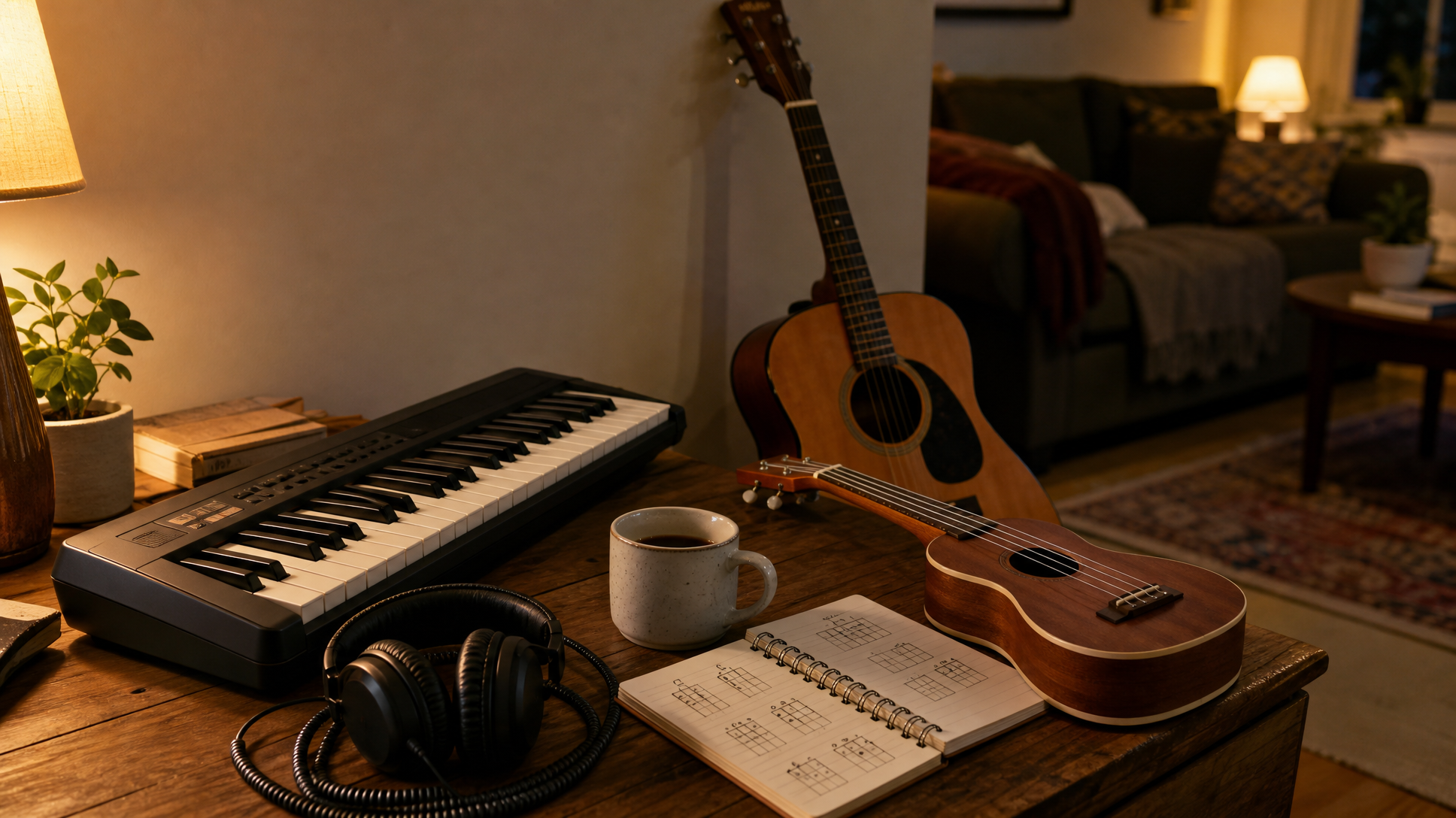
If your goal is to understand pop music and play what you hear, a keyboard is probably your best starting point. The layout is visual and logical — you can literally see the relationship between notes. You'll be playing simple chord-based pop songs within weeks, not months. And because so much of modern pop is keyboard-driven, you'll be learning the instrument that's most central to the genre.
You don't need a full 88-key weighted piano to start. A mid-range digital keyboard with at least 61 keys gives you plenty of room to grow without the footprint or cost of an upright piano.
Guitar — Steep Start, Big Payoff
Guitar has a steeper early curve than keyboard — your fingertips will hurt, chord transitions take real repetition, and the fretboard isn't as visually intuitive. But once you're past the first month or two, it opens up fast. For pop specifically, you can strum four chords and cover a huge number of songs. Acoustic or electric both work; the choice mostly comes down to the sound you're chasing.
Bass Guitar — Underrated as a First Instrument
Bass gets overlooked, but it's genuinely one of the easier instruments to get started on. Four strings, a clear role in the band, and you're playing single notes rather than chords at first. If you're drawn to the groove and rhythm side of music more than melody, bass might fit you better than guitar — and you'll be in demand the moment you want to play with other people.
Drums — Different Kind of Learning
Learning drums is a different commitment — you're developing coordination across all four limbs simultaneously, and you'll need either a drum kit or a decent electronic kit with a practice pad setup. It's not a bad first instrument if rhythm is genuinely what excites you, but it's a longer road before you're playing along to actual songs. Be honest with yourself about whether that's the journey you want.
How to Actually Choose
Forget which instrument is "easiest" in the abstract. Ask yourself three things instead:
- What part of a song do you notice first? If it's the chord progression or the melody, go keys or guitar. If it's the rhythm or the bass line, go drums or bass.
- What do you want to do with it? Play alone at home, jam with friends, perform, record? Each instrument has a different social role.
- What can you realistically practice? An acoustic guitar needs no setup. A drum kit needs space and tolerance from neighbors. A keyboard needs a power outlet and headphones. These practical things matter more than most people admit.
One more thing: don't treat your first instrument as a lifetime commitment. A lot of musicians start on one instrument and add a second within a year or two. The skills transfer more than you'd expect — especially rhythm and ear training.
If you're still working through questions like whether to buy online or what to look for in a beginner instrument, this guide on ordering instruments online: what to check before you buy covers the practical side in detail.
Start With the Sound You Love
The best instrument for learning pop music is the one that's already pulling at you when you listen to your favorite songs. You already know which part of the track you can't stop listening to — that's your answer.
Shop keyboards, guitars, bass guitars, and beginner gear at Emusicmart — all the instruments from this list, in one store, shipped across the U.S.
Frequently Asked Questions
What instruments are most commonly used in pop music?
Most pop songs are built on keyboards or synthesizers, guitar (acoustic or electric), bass guitar, and programmed or electronic drums. Vocals are obviously central, but in terms of the instrumental layers, keys and synths tend to dominate modern pop production.
Is keyboard or guitar better for learning pop songs as a beginner?
Keyboard tends to be more intuitive for absolute beginners because the note layout is visual and logical. You can play recognizable pop melodies and chord progressions relatively quickly. Guitar has a steeper early curve but is also a great choice if the guitar sound is what draws you to a song. It really comes down to which part of the music you're most drawn to.
Do I need an expensive instrument to start learning pop music?
No. A mid-range beginner keyboard, acoustic guitar, or bass guitar is more than enough to get started. The goal at first is building technique and ear training — you don't need professional-grade gear for that. Upgrading later, once you know what you actually want from an instrument, makes far more sense than overspending upfront.
Can I learn to play pop music without reading sheet music?
Yes — and most pop musicians do exactly that. Chord charts, tabs (for guitar and bass), and learning by ear are all completely valid approaches. Reading music is a useful skill to develop over time, but it's not a prerequisite for playing pop songs you enjoy.