Cart
0
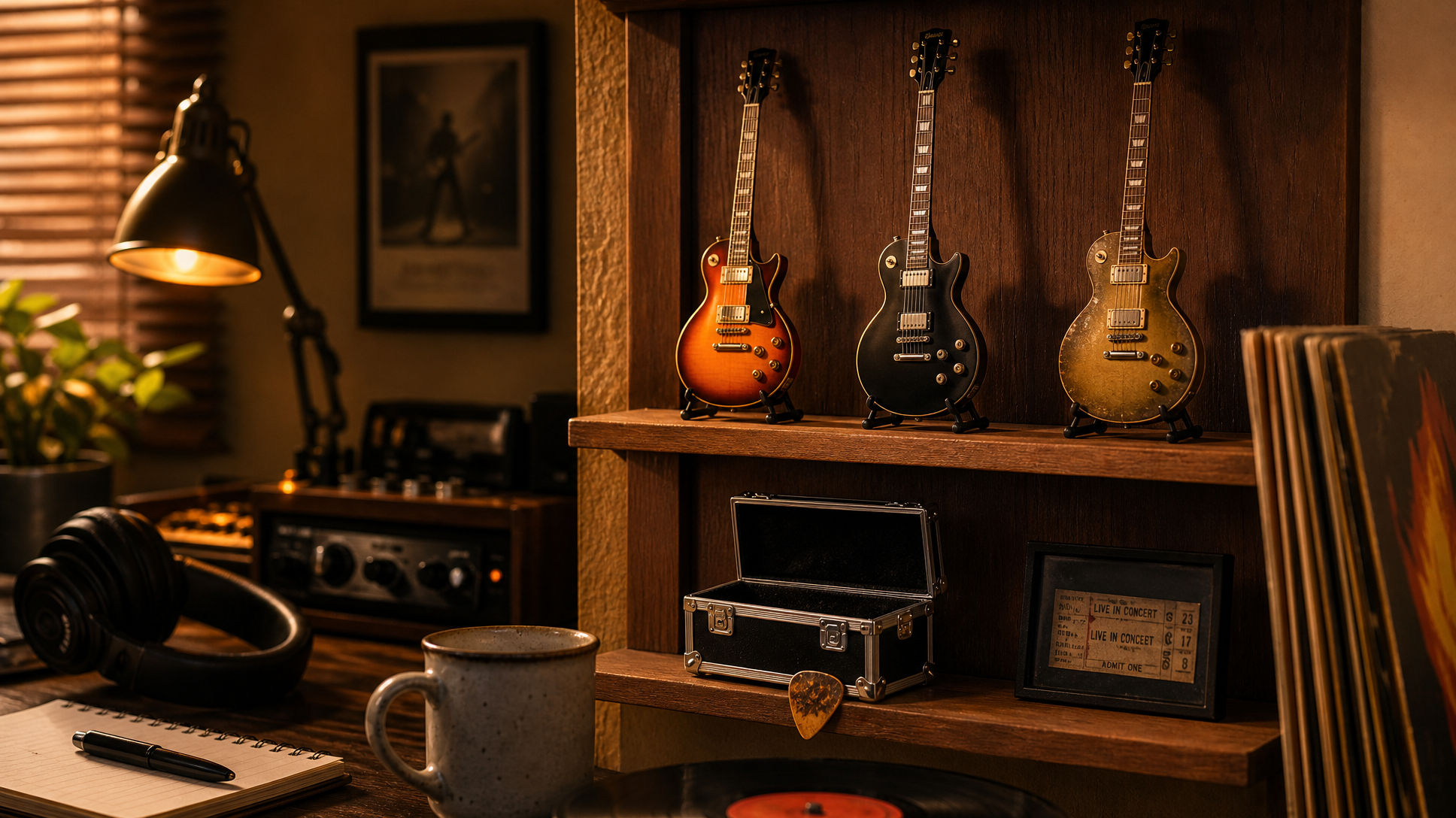
The guitar you'll never play might be the one worth owning
Most musicians have a guitar they actually play and a guitar they wish they owned. The second one lives in a magazine, a music video, or on the stage of a show they saw at nineteen. It's Stevie Ray Vaughan's battered Number One. It's Clapton's Stratocaster from a legendary session. It's a guitar with a story attached to it — and in most cases, it costs more than a used car.
Miniature replicas exist because of that gap. Not to replace the real thing, but to close the distance between the guitar that shaped your taste and the shelf in your studio, office, or practice room. The category has matured well past the cheap souvenir stage, and if you haven't looked at it recently, the difference is worth understanding.
Why artists actually sign off on these
The first question most people ask is: why would Eric Clapton or Dave Mustaine lend their name to a miniature guitar? The answer is simpler than it sounds — because the officially licensed ones are accurate.
When a replica is produced under an official license, the artist and their team review the specs. The headstock shape, the body contours, the hardware placement, the finish color — all of it goes through an approval process. That's a meaningful distinction. An artist who has spent decades being associated with a specific instrument isn't going to approve something that misrepresents it. Their name is on it.
That accountability is exactly what separates a licensed collectible from a generic miniature. One is a documented reproduction of a real, historically significant guitar. The other is a guitar-shaped object.
What actually makes a mini replica worth displaying
Scale and finish are the two things that matter most, and they're also the two things most cheap novelties get wrong.
A well-made replica holds its proportions accurately — the body-to-neck ratio, the headstock silhouette, the pickup spacing. When those are off, even a casual observer notices something feels wrong, even if they can't name exactly what it is. Good replicas are built to a consistent scale so that the instrument reads as a real guitar, just smaller.
Finish quality is the second test. A painted-on sunburst that looks like a sticker is a giveaway. The replicas worth owning have finishes that reflect how the original guitar actually looks — the wear patterns on SRV's Number One, the specific shade of a Clapton signature model. Details like that aren't accidents; they're the result of someone caring enough to get them right.
Then there's the packaging. A mini guitar that ships in a road case — even a miniature one — is communicating something about how it's meant to be treated. It's not a party favor. It's a collectible that happens to be compact.
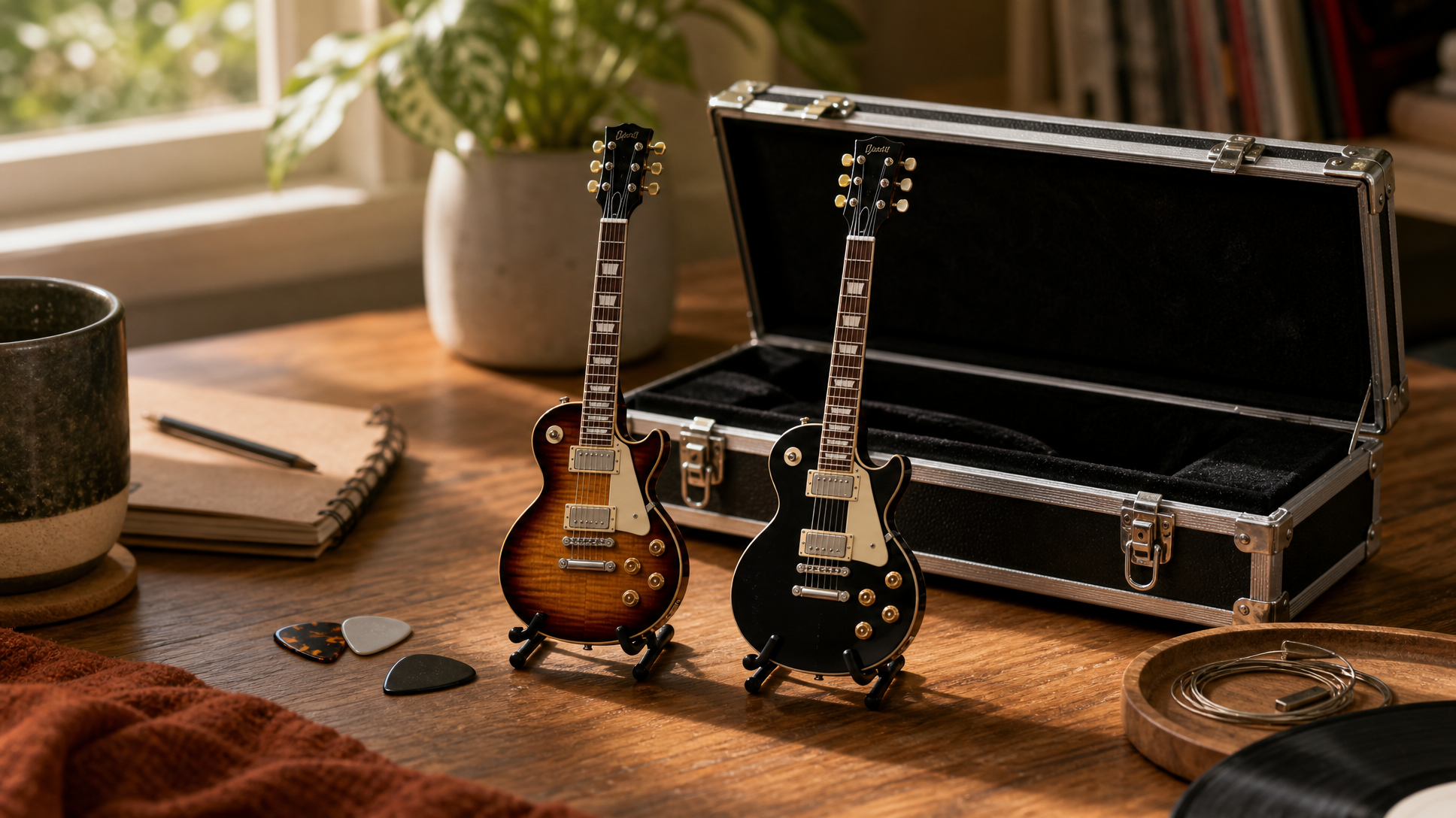
The wall vs. the closet problem
Here's the honest version of what happens with most collectibles: they get displayed for a few months, then migrate to a shelf, then to a closet. The reason is almost always that they weren't specific enough. A generic "vintage-style" guitar replica doesn't hold meaning for long because it doesn't connect to anything real.
An officially licensed Crashocaster replica — Clapton's specific guitar from a specific moment in music history — is a different object. It has a story. You know what it is, where it came from, and why it exists. That specificity is what keeps something on the wall instead of in a box.
If you're buying a mini replica as a gift, this is the most important thing to get right. Don't buy a generic miniature guitar for someone who is devoted to a specific artist. Buy the replica of the guitar that artist actually played.
Who actually buys these
The audience for officially licensed mini replicas is broader than you'd expect. It's not just collectors in the traditional sense.
Working musicians buy them as studio décor — a way to reference the artists who shaped their sound without taking up the floor space a full-size guitar requires. Music teachers keep them as conversation starters and teaching aids. Fans of a specific artist buy them because a poster feels generic and a replica feels personal. And yes, serious collectors buy them because a well-documented, officially licensed replica holds its significance over time in a way a novelty never will.
The category also makes sense as a gift for exactly the kind of person who is hardest to buy for: someone who already has the gear they need and plays regularly. You're not buying them a tool. You're buying them a piece of the music they love.
Browse officially licensed mini guitar replicas at Emusicmart
Emusicmart carries officially licensed miniature guitar replicas — including models like Eric Clapton's Crashocaster and the SRV Number One, which ships with its own mini road case. If you're looking for something specific or want to see what's currently in stock, browse the full catalog at Emusicmart.com. And if you're newer to buying instruments and audio gear online and want to know what to look for before you commit, the guide on ordering instruments online is worth a read first.
The guitar you'll never play might be exactly the one your wall has been waiting for.
Frequently Asked Questions
What does "officially licensed" mean for a miniature guitar replica?
An officially licensed replica is produced with the approval of the artist, their estate, or the brand that owns the original instrument's rights. That means the design — body shape, finish, hardware details — has been reviewed and authorized rather than copied without permission. It's the difference between a replica that accurately represents the real guitar and one that's just inspired by it.
Are miniature guitar replicas playable?
Officially licensed collectible replicas are display pieces, not functional instruments. They're built to look accurate at scale, not to be strung and played. If you're looking for a small guitar that actually plays, that's a different category — travel guitars or parlor guitars are worth exploring for that purpose.
How do I know if a mini guitar replica is worth the price?
Look for three things: an official license tied to a specific artist or instrument, accurate scale proportions (the body-to-neck ratio should look right, not cartoonish), and a quality finish that reflects the original guitar's actual appearance. Packaging matters too — a replica that ships in a mini road case or display case signals that the manufacturer took the product seriously. Generic miniatures typically skip all three.
What's a good mini guitar replica to buy as a gift?
Match the replica to the artist the recipient actually cares about — that specificity is what makes it meaningful rather than generic. If they're a Clapton fan, a Clapton-licensed model lands differently than a generic vintage sunburst. If they follow SRV, the Number One replica (especially with its mini road case) is immediately recognizable to anyone who knows the guitar's history. The more specific the connection, the longer it stays on the wall.