Cart
0
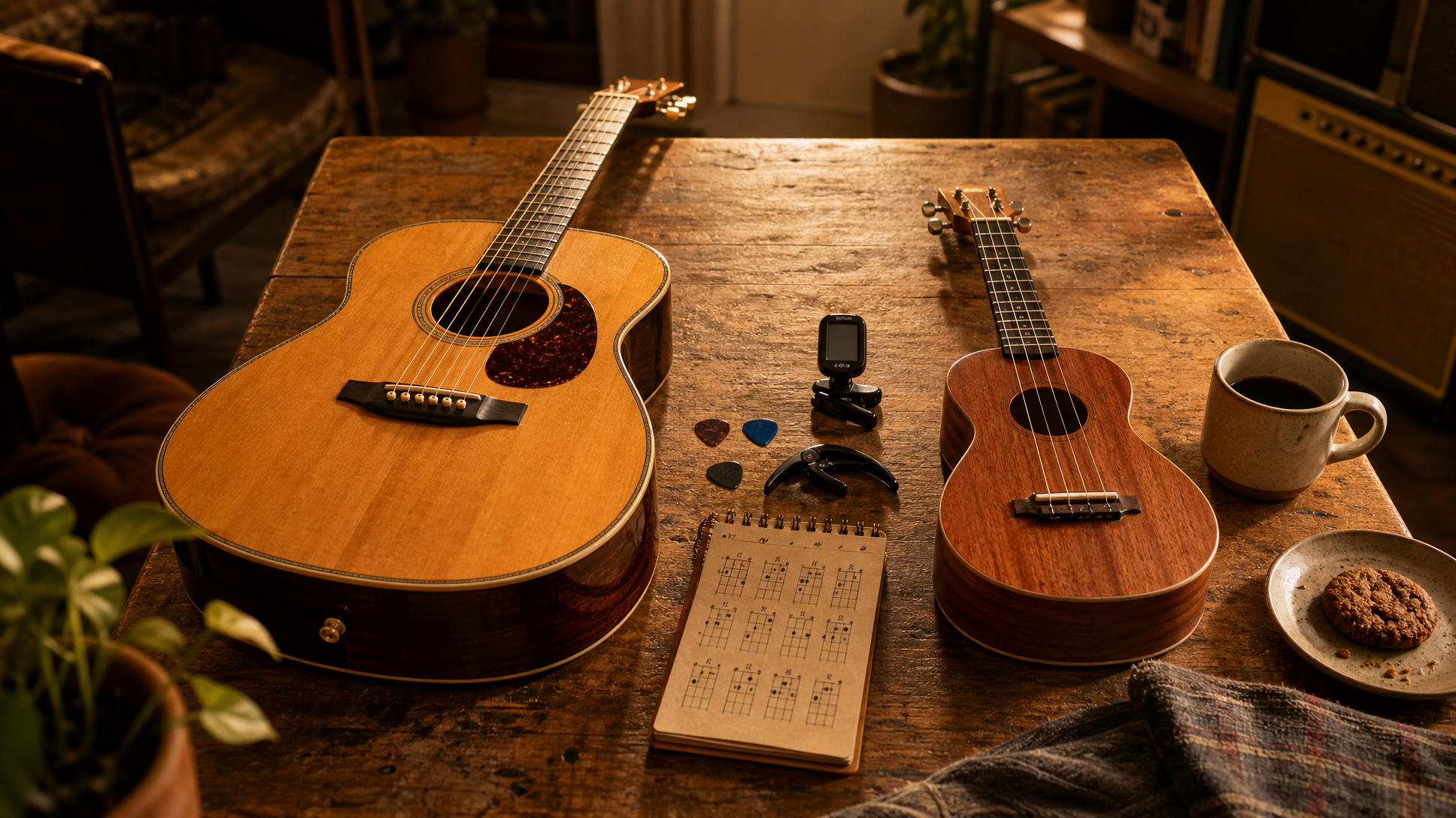
Most people spend longer debating this than they spend actually playing. You've watched a few YouTube videos, read three forum threads that contradict each other, and you're still not sure. So let's just be direct about what each instrument costs you — not in dollars, but in time, frustration, and fingertip pain — in those first critical weeks.
The honest case for ukulele first
The ukulele wins on one thing that matters enormously for beginners: you'll play a real song faster. Not because it's a toy or a lesser instrument, but because of how it's built. Nylon strings are softer on your fingertips, the neck is narrower, and most beginner songs only need three or four chords. You can get through a recognizable version of a song in your first week. That matters more than people admit, because early wins are what keep you practicing.
Chord shapes on a ukulele are also genuinely simpler. A C chord is one finger. G is two. You're not contorting your hand around a wide neck trying to mute strings you're not supposed to hit. The physical barrier to entry is lower, and that translates directly into less frustration in week one.
The trade-off is real, though. The ukulele's four-string, re-entrant tuning means that when you eventually want to learn guitar — or play in a band, or accompany a singer across a wider range of songs — you'll be starting over in some important ways. The chord shapes don't transfer cleanly. What you learn on uke is not a stepping stone to guitar; it's its own path.
The honest case for guitar first
Guitar has a steeper ramp, and pretending otherwise is why a lot of beginners quit. Your fingertips will hurt for two to three weeks until calluses form. Steel strings (on acoustic and electric guitars) are harder on soft fingertips than nylon, and the chord shapes — especially F major, which haunts every beginner — require hand strength and stretch that takes time to build. The neck is wider, the body is bigger, and you're managing six strings instead of four.
But here's what that difficulty buys you: a much larger world. Guitar is the foundation of almost every genre — rock, folk, country, blues, pop, classical. The chord shapes you learn transfer directly to bass guitar and, with some adjustment, to other fretted instruments. Tabs and tutorials are everywhere. And if you ever want to play with other people, guitar fits into almost any musical setting.
The song library available to a guitarist is also just larger. Not because ukulele songs don't exist — they do — but because when you search for a song you love, there's almost certainly a guitar version of it. That breadth keeps long-term players engaged.
What the first three months actually look like
Ukulele: Week one, you're playing simple songs. Week four, you're probably comfortable with five or six chords and can strum through a handful of songs you actually recognize. By month three, you're working on fingerpicking patterns or more complex chord transitions. The learning curve is gentler, which means you're less likely to quit — but you're also not building the hand strength or music theory foundation that guitar would push you toward.
Guitar: Week one is mostly about getting comfortable holding the instrument and pressing chords without your fingers buzzing. Week four is when things start to click — open chords sound cleaner, switching between them gets smoother. By month three, you're playing through full songs, your calluses are solid, and the hard part is mostly behind you. The early weeks are harder, but the payoff compounds faster once you're past them.
The one question that actually decides it
Forget which is "easier." Ask yourself: what songs do you want to play in six months? If you can name three or four specific songs right now and they're all guitar songs — play guitar. If you're drawn to the ukulele's sound, or you want a low-pressure entry into music without a steep early struggle, start with uke. Neither answer is wrong. They're just different destinations.
One thing worth skipping: don't buy a ukulele thinking it'll make guitar easier later. It might make music feel more approachable, but the skill transfer is limited. If guitar is where you want to end up, start there.
A quick note on gear for beginners
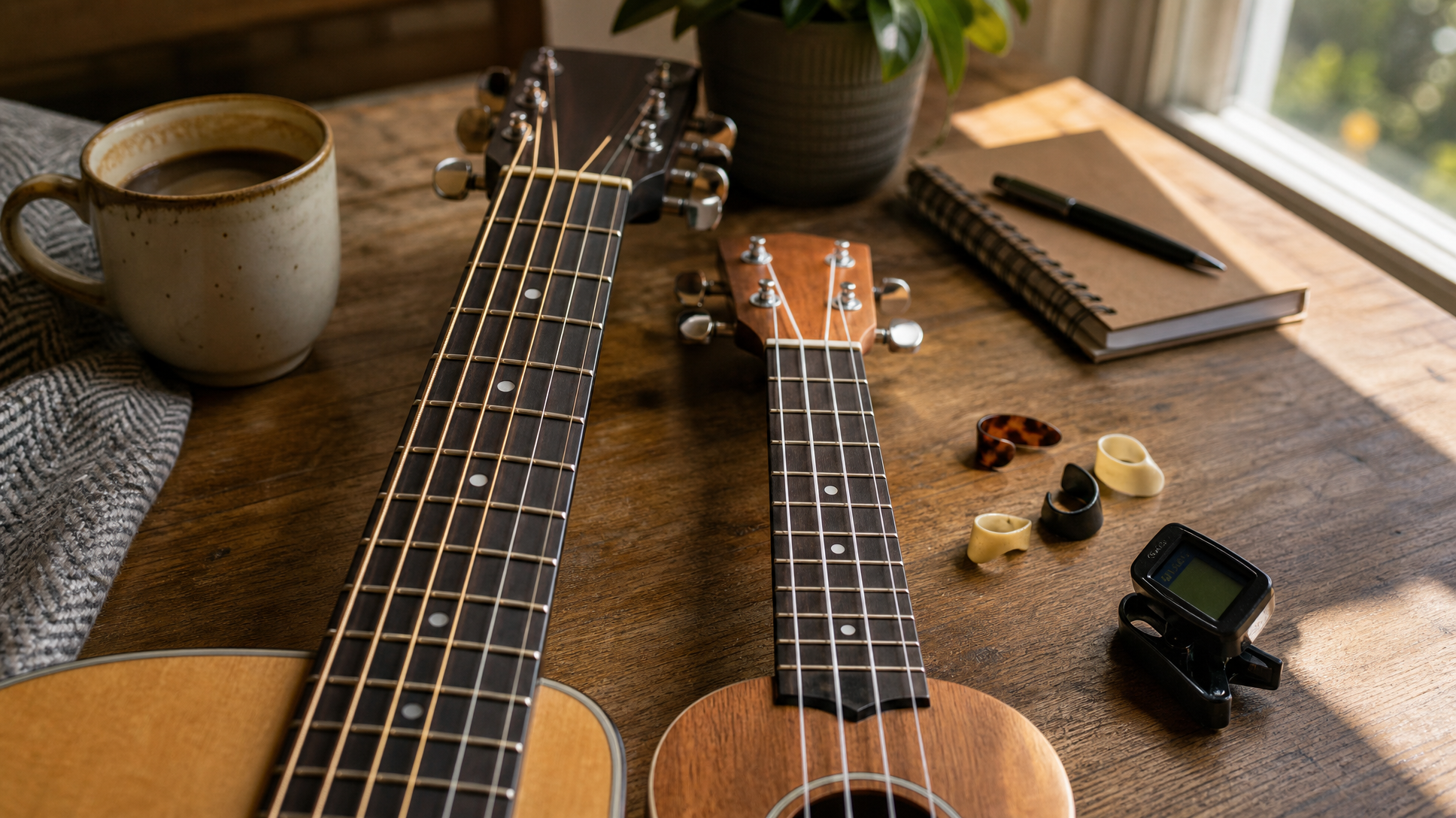
Whichever you choose, the instrument matters less than consistency — but a bad instrument makes consistency harder. Cheap guitars and ukuleles that won't stay in tune, have high action (the gap between the strings and fretboard), or have structural issues are genuinely discouraging. You don't need to spend a lot, but you do need something that plays reasonably well out of the box. If you're ordering an instrument online, it's worth knowing what to look for before you buy.
At Emusicmart, you can browse beginner guitars and ukuleles side by side — both ship across the U.S. with secure checkout. No pressure to decide right now, but when you're ready, the options are there.
Shop beginner guitars and ukuleles at Emusicmart — U.S. shipping, secure checkout, and a wide selection to match where you're starting from.
Frequently Asked Questions
Is ukulele actually easier than guitar for a complete beginner?
In the first few weeks, yes — noticeably so. Fewer strings, softer nylon strings that are easier on your fingertips, a narrower neck, and simpler chord shapes all lower the barrier to playing your first song. That said, "easier" doesn't mean "better." If your goal is guitar, starting on ukulele won't shortcut the process — it's a different instrument with its own learning path.
Do ukulele chord shapes transfer to guitar?
Not directly. The tuning systems are different, so a chord shape you learn on ukulele doesn't map cleanly onto guitar strings. You'll pick up general music concepts — rhythm, strumming patterns, how to read chord diagrams — but the physical chord shapes themselves don't carry over. If guitar is your end goal, it's usually better to start there.
How long does it take for guitar fingertip pain to go away?
Most beginners find that the soreness fades and calluses form within two to four weeks of regular practice. The key is consistency — short daily sessions build calluses faster than occasional long ones. If you're playing on steel strings and the pain is significant, practicing for shorter stretches more frequently tends to help.
What size ukulele should a beginner buy?
A soprano or concert ukulele is the most common starting point. Soprano is the classic, compact size with a bright sound; concert is slightly larger with a bit more volume and a slightly wider neck, which some beginners find easier to fret cleanly. Tenor and baritone ukuleles exist too, but they're less typical as a first instrument. For most adults, concert is a solid choice.