Cart
0

The label problem nobody talks about
You search for a piano online, and within seconds you're looking at three product pages that all seem to do the same thing — but one's called a digital piano, one's a keyboard, and one's a synthesizer. The prices are all over the place. The specs mention weighted keys, polyphony, oscillators, MIDI, and patch memory. You close the tab.
Here's the thing: those three terms aren't interchangeable. They describe instruments built around genuinely different priorities. Once you understand what each one is actually designed to do, the right choice gets a lot clearer — and you stop paying for features you'll never touch.
Digital Piano: Built to feel like an acoustic
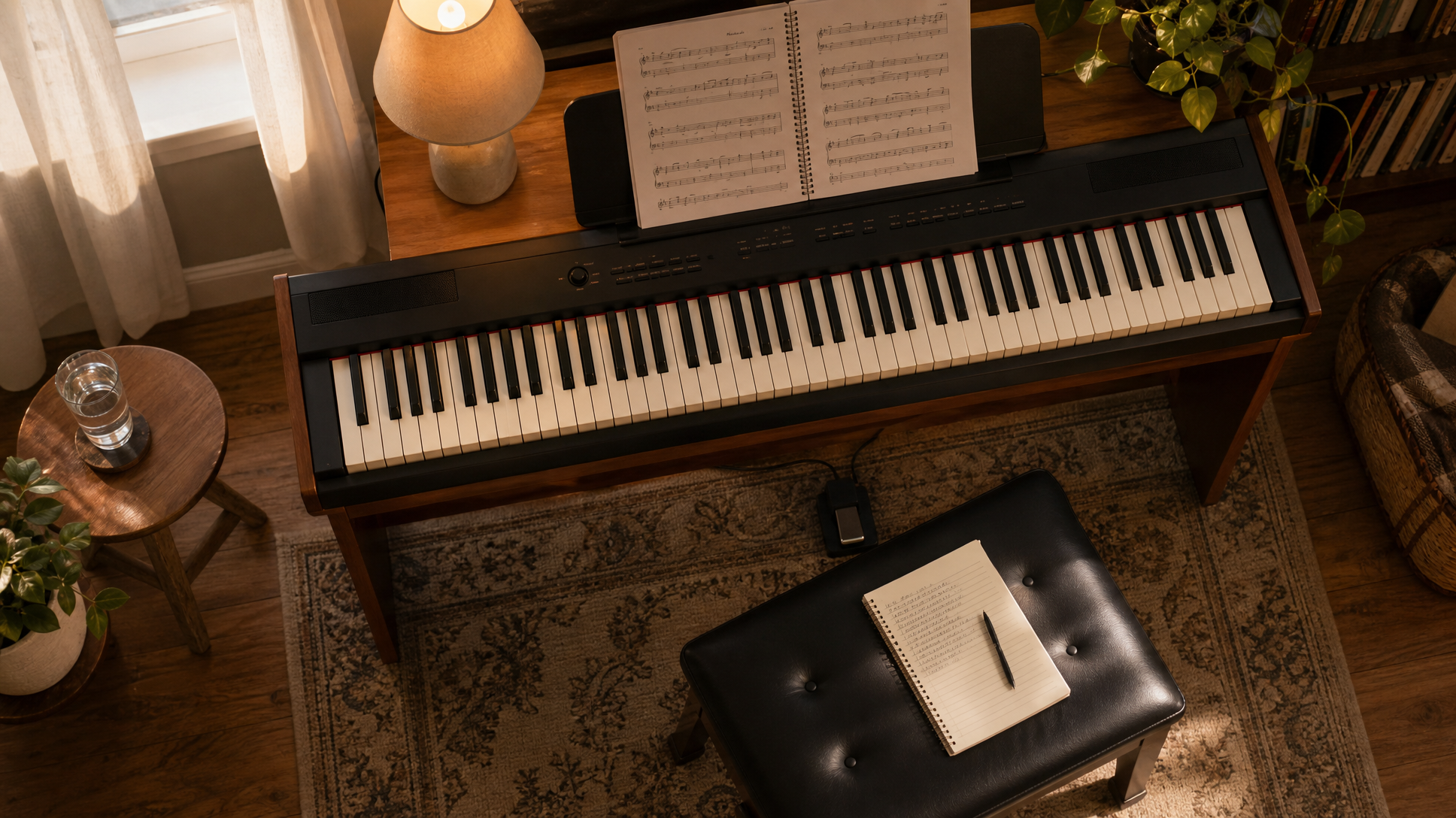
A digital piano's entire design philosophy is about replicating the acoustic piano experience. That means weighted keys — usually 88 of them — that push back against your fingers the way real piano hammers do. The heavier resistance at the low end, the lighter touch at the top: that's called graded hammer action, and it's what separates a digital piano from everything else in this category.
The sound engine is focused almost entirely on piano tones: grand piano, upright, maybe electric piano and organ. You're not getting hundreds of synth patches or drum kits. That's intentional. A digital piano is for someone who wants to practice classical repertoire, work through jazz standards, or compose at home without the tuning bills and space demands of an acoustic instrument.
If you're taking lessons, planning to play piano seriously, or transitioning from an acoustic, a digital piano is almost certainly the right call. The weighted action trains your hands correctly. A regular keyboard won't.
Keyboard: The practical generalist
"Keyboard" is actually a catch-all term for a broad category of instruments, but in everyday retail usage it usually refers to an unweighted or semi-weighted instrument with a wide bank of built-in sounds — piano, strings, brass, guitar, drums, and more. Think of it as the Swiss Army knife of the bunch.
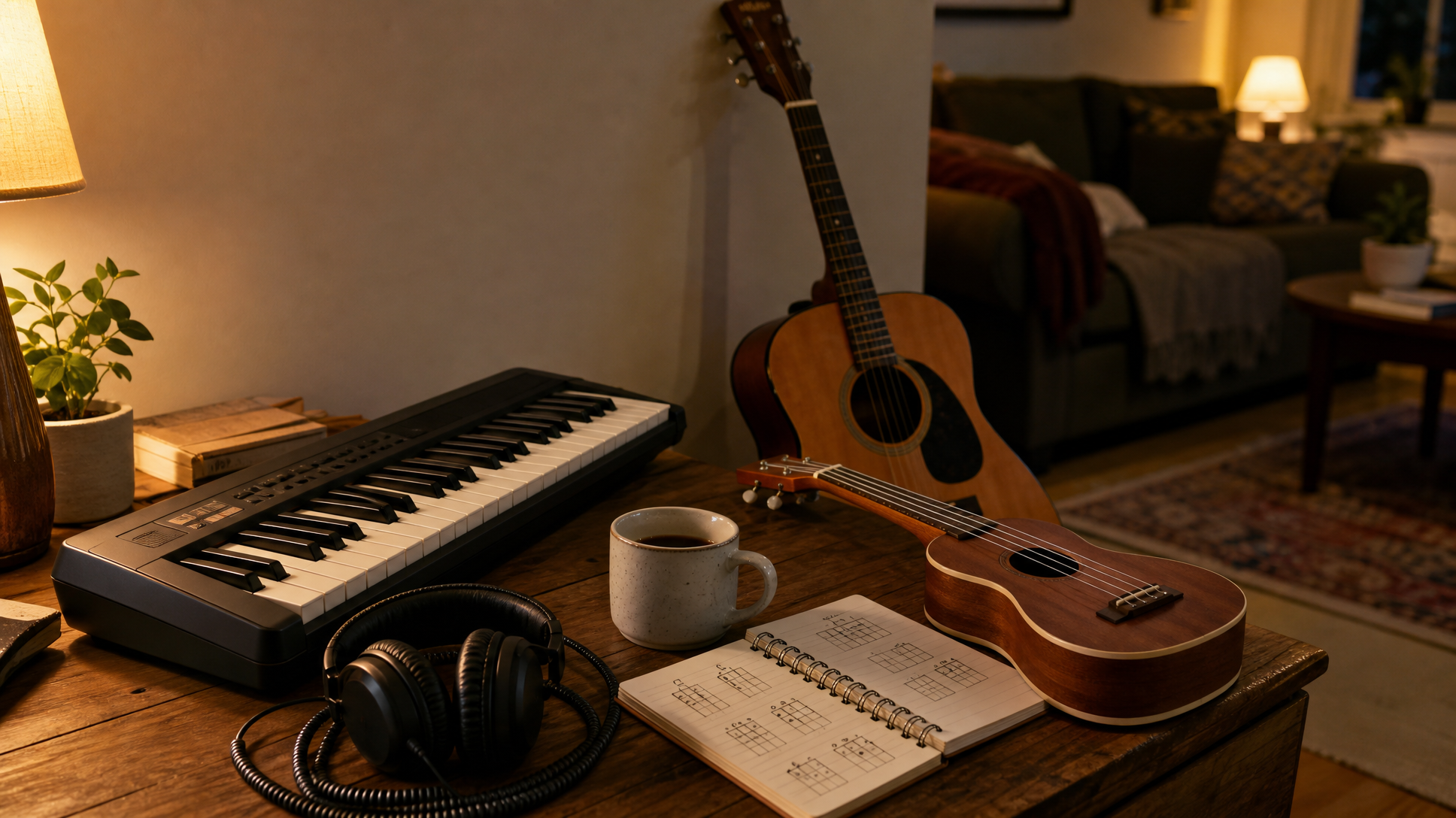
Keyboards typically have fewer than 88 keys (61 and 76 are common), lighter key action, built-in speakers, and an arranger section with auto-accompaniment rhythms. They're portable, often battery-powered, and designed for players who need versatility: the gigging musician who doubles on keys, the hobbyist who wants to noodle across genres, the kid learning their first instrument.
What they're not ideal for: serious piano technique development. The unweighted action feels nothing like an acoustic piano, so if classical training or finger strength is the goal, a keyboard is the wrong tool. But if you want something you can carry to rehearsal, plug into a PA, and switch from a string pad to a brass stab mid-song, a keyboard earns its place.
Synthesizer: Built to shape sound from scratch
A synthesizer generates sound electronically — through oscillators, filters, envelopes, and modulation — rather than reproducing recordings of acoustic instruments. That distinction matters more than any spec sheet.
Synths come in wildly different forms: analog, digital, subtractive, wavetable, modular. Some have keys; some don't (tabletop and Eurorack modules are synthesizers without a keyboard at all). What they share is the ability to sculpt and design sounds rather than just play back pre-recorded ones. That's why you see them in electronic music production, film scoring, and experimental performance — anywhere the goal is a sound that doesn't exist in nature.
A synthesizer is the right choice if you're producing electronic music, building soundscapes, or you actively want to get into sound design. It is not the right choice if you just want something that sounds like a piano. You can dial in a piano-ish patch on most synths, but it'll never feel or sound like a digital piano built for that purpose.
The one question that cuts through all of it
Before you filter by price or brand, answer this: What does this instrument need to do for you?
- Practice piano technique, take lessons, or play classical and jazz repertoire? Get a digital piano with weighted keys.
- Play live, cover multiple sounds in one instrument, or need something portable and versatile? A keyboard is probably your match.
- Produce electronic music, design original sounds, or score to picture? Look at synthesizers.
If you're still on the fence, consider where you'll use it most. A digital piano is a commitment — it lives in one room and does one thing brilliantly. A keyboard travels. A synthesizer rewards the player who wants to spend hours exploring what it can do, not just sit down and play a song.
A note on MIDI and connectivity
All three instrument types typically offer MIDI output these days, which means any of them can trigger sounds in a DAW or connect to other gear. This is worth knowing because it changes the calculus slightly: a digital piano with MIDI out can double as a controller for your recording software. A keyboard can trigger a synth plugin. A synthesizer can be played from a MIDI controller with better key action.
So the lines do blur — but only at the connectivity layer. The core instrument experience (key feel, built-in sounds, intended workflow) stays true to the category.
If you're still working out what to look for before committing to a purchase, our guide on ordering instruments online and what to check before you buy walks through the practical side of getting gear delivered safely and confidently.
Ready to find the right one? Browse digital pianos, keyboards, and synthesizers at Emusicmart — filter by what the instrument actually needs to do for you, not just by price.
Frequently Asked Questions
Can a synthesizer replace a digital piano for learning?
Not really, and this is one of the most common mistakes beginners make. A synthesizer's key action is designed for performance and sound design, not for building piano technique. If you're taking lessons or working through classical or jazz repertoire, the weighted action of a digital piano is what trains your fingers correctly. A synth can play notes, but it won't build the hand strength or touch sensitivity that proper piano study requires.
How many keys do I actually need?
For serious piano practice, 88 keys is the standard — it covers the full range of classical and most contemporary repertoire. For gigging, producing, or casual playing, 61 or 76 keys covers the vast majority of what most players actually use. If you're buying a synthesizer primarily for electronic production, even 49 keys can be enough, since you'll often be playing one hand at a time or programming sequences rather than playing full two-handed arrangements.
What does "polyphony" mean, and does it matter?
Polyphony refers to how many notes an instrument can produce simultaneously. A higher polyphony count means you can hold down chords, use the sustain pedal, and layer sounds without notes cutting out unexpectedly. For piano playing — where you're often sustaining notes with the pedal while playing new ones — you want a reasonably high polyphony count. For most synthesizer work, this matters less since you're often working with individual voices or simpler arrangements.
Is a keyboard the same as a MIDI controller?
Not exactly. A keyboard has its own built-in sounds and can be played as a standalone instrument. A MIDI controller has keys but produces no sound on its own — it sends MIDI data to a computer, DAW, or external sound module to trigger sounds. Some keyboards also function as MIDI controllers, but a dedicated MIDI controller without built-in sounds is its own separate category, designed primarily for studio and production use.